THE PERIODIC TABLE OF IDEAS
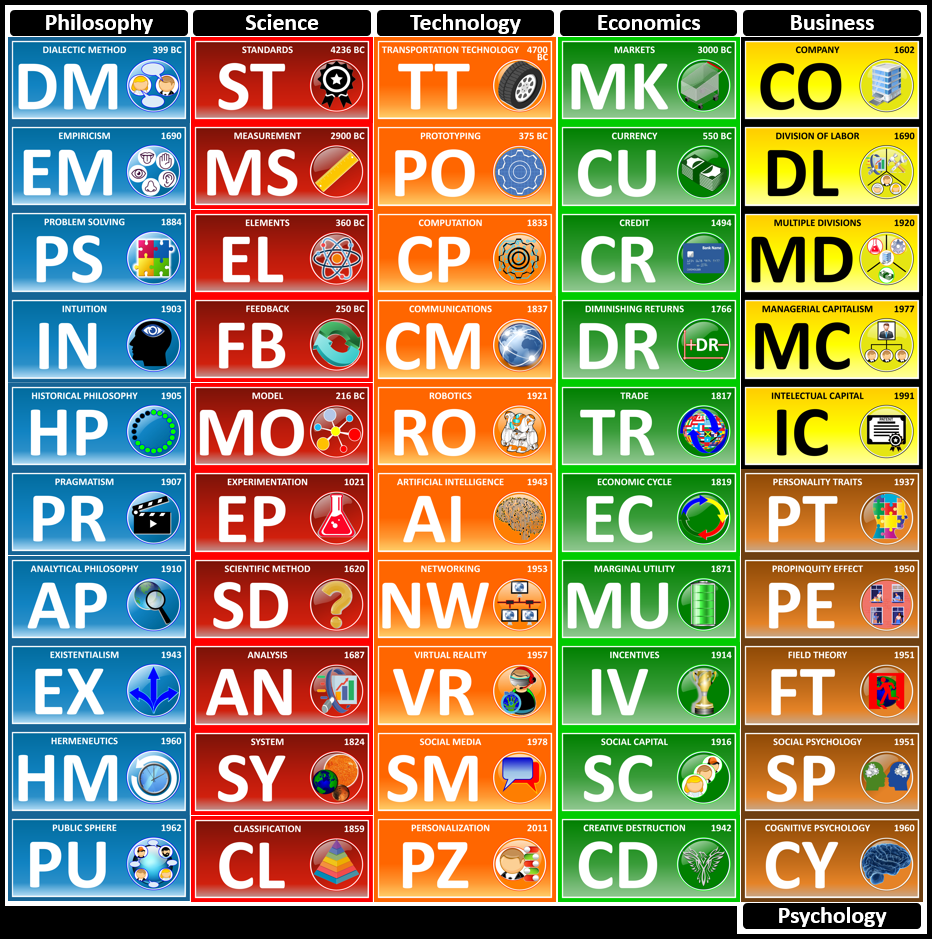
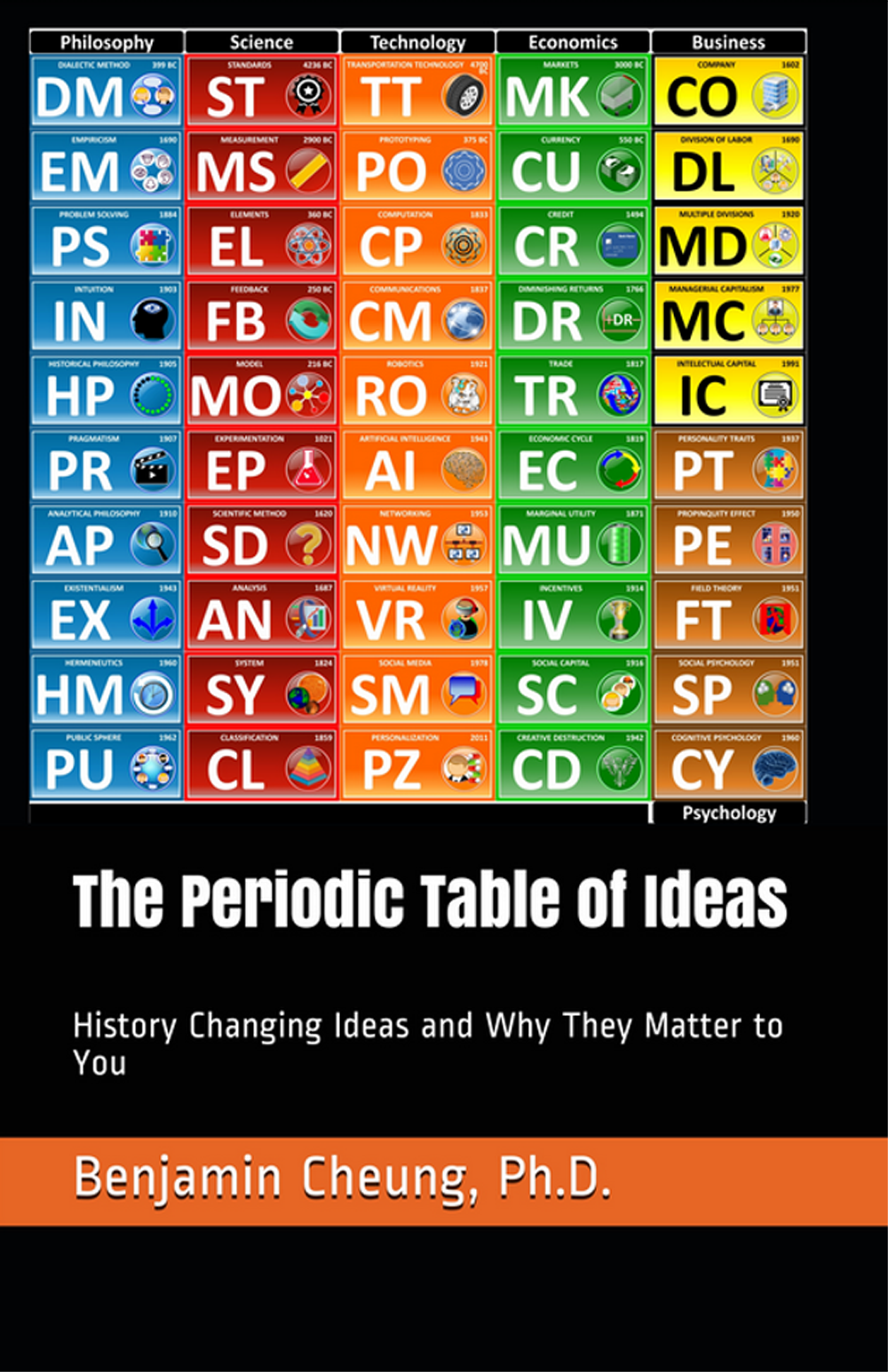
The Periodic Table of Ideas is a book about a collection of pivotal ideas in history.
These concepts span the disciplines of business, economics, philosophy,
psychology, science and technology. The periodic ideas represent the
pinnacle of human thought and achievement. They are among the most
ingenious and enduring ideas you will ever encounter. You can inherit
these intellectual treasures by learning to apply the ideas in this book.
The periodic ideas have affected the lives of billions of people across millennia.
They are periodic and recur throughout history and civilization. People wielding
them have wrought prosperity and forged progress.
MAJOR MEDICAL ADVANCEMENTS
1 Hippocrates: The Father of Medicine
Hippocrates, known as the "Father of Medicine," revolutionized healthcare by separating medicine from religion and superstition. He established that diseases have natural, physical causes rather than being punishments from the gods.
# Major Contributions
- * Rational Science: Shifted medical study away from magic and philosophy into a structured, rational discipline based on natural laws.
- * Clinical Observation: Pioneered the systematic recording of patient symptoms, clinical signs, and disease progression to establish accurate diagnoses and prognoses.
- * Medical Ethics: Inspired high standards for professional conduct and patient confidentiality, famously represented by the Hippocratic Oath.
- * Lifestyle & Prevention: Advocated for proper diet, hygiene, and physical exercise as the primary remedies and preventions for illness.
2 Herophilus and Erasistratus: Heart is a mechanical pump
Erasistratus of Ceos (c. 310-250 BCE) made a foundational medical first by distinguishing between veins and arteries and correctly describing the heart as a mechanical pump equipped with one-way valves (including naming the tricuspid valve).
# Key Anatomical and Physiological Firsts
- * Vascular Distinction: First to clearly differentiate veins from arteries, though he mistakenly believed arteries carried pneuma (air) rather than blood.
- * Cardiac Function: First to describe the heart as a pump rather than the seat of the soul or emotions.
- * Brain and Nerves: First to distinguish the cerebrum from the cerebellum and trace sensory and motor nerves back to the brain.
- * Founder of Physiology: Widely credited as an early pioneer or founder of experimental physiology through his human dissections in Alexandria.
3 Marcus Varro: Concept of Germ Theory of Disease
In 36 BCE, Roman scholar Marcus Terentius Varro outlined a concept resembling the Germ Theory of Disease in his agricultural treatise Rerum rusticarum libri III, warning that swamps breed invisible "minute creatures" that float in the air, enter through the nose and mouth, and cause serious diseases.
# Varro's Hypothesis The
- *Claim: Unseen, microscopic life forms exist in damp environments like marshes.
- *Transmission: These invisible particles travel via the air and enter the human body via inhalation or ingestion.
- *The Result: They trigger persistent and severe illnesses, prompting his practical advice to avoid building homesteads near swamps
4 Soranus: gynecology & obstetrics
Soranus of Ephesus, a 2nd-century AD Greek physician, is celebrated as the first specialist in ancient gynecology and obstetrics. His defining medical first was writing On Midwifery and the Diseases of Women, the earliest comprehensive systematic textbook on female reproduction, contraception, complicated birth management, and neonatal assessment that remained the gold standard for 1,500.
# Key Innovations and Firsts
- *Obstetric Chair: Detailed and popularized the use of a specialized birthing chair to support upright, gravity-assisted delivery.
- *Podalic Version: Documented the maneuver to turn a fetus inside the womb to deliver it feet first during difficult presentations.
- *Neonatal Assessment: Outlined the earliest clinical criteria to evaluate a newborn's viability and health (foreshadowing the modern Apgar score).
- *Evidence-Based Gynecology: Rejected magical folklore in favor of physical hygiene, regulated diet, and empirical care during pregnancy and postpartum recovery
5 Galen of Pergamon: Arteries carry blood not air
Galen of Pergamon made a foundational medical first by proving that arteries carry blood rather than air, demonstrating through animal vivisections that the brain controls the body, and showing experimentally that the larynx generates the voice.
# Key Anatomical & Physiological Firsts
- * Nervous control: First to prove the brain (not the heart) controls the body and distinguish sensory from motor nerves.
- * Voice production: First to demonstrate that the larynx and recurrent laryngeal nerve generate the voice.
- * Vascular contents: First to prove that living arteries contain blood, overturning centuries of belief that they held air.
- * Kidney function: First to experimentally show that the kidneys produce urine (via bladder catheterization experiments).
6 The Enlightened Mind of Abu Bakr al-Razi
Abu Bakr al-Razi (Rhazes) achieved several monumental medical firsts during the 10th century. He was the first to clinically differentiate smallpox from measles, establish an early psychiatric ward in Baghdad, use alcohol as an antiseptic agent, and apply empirical clinical observation to treatments.
# Disease Differentiation and Clinical Practice
- * Smallpox and measles: Wrote the definitive treatise separating the two infections through clear symptom analysis.
- * Psychiatry: Directed a Baghdad hospital and founded an early dedicated ward for treating mental illness.
- * Controlled trials: Pioneered testing methods by comparing treated patient groups against untreated control groups.
# Pharmacology and Surgery
- * Antiseptics: Documented methods incorporating alcohol in clinical settings.
- * Anesthesia: Employed early forms of opium for pain control during surgical procedures.
- * Chemistry: Discovered sulfuric acid and ethanol through distillation experiments.
7 Ibn al-Nafis: Pulmonary Circulation of the Blood
Ibn al-Nafis (1213-1288) made his key medical first by providing the earliest correct description of the pulmonary circulation of blood, detailing how blood moves from the right ventricle to the lungs.
# Circulatory and Anatomical Discoveries
- * Pulmonary blood flow: First to state that blood flows from the right ventricle to the left only after passing through the lungs.
- * Refutation of septal pores: First to challenge and disprove Galen's ancient theory that blood passes directly through invisible pores in the heart's interventricular septum.
- * Coronary circulation: First to propose that the heart muscle is nourished by blood from the coronary arteries rather than from blood inside the heart chambers.
- * Capillary prediction: First to theorize small communications or pathways between the pulmonary artery and vein in the lungs, centuries before microscopes confirmed capillaries.
8 Paracelsus: Renaissance Father of Toxicology
Paracelsus (1493-1541) is famously heralded as the father of toxicology for establishing the foundational medical principle that the dose determines whether a substance is a poison or a cure.
# Core Medical Innovations
- *The Dose Concept: Formulated the maxim that any substance can act as a poison depending on the quantity administered.
- *Introduction of Iatrochemistry: Pioneered the application of chemistry and minerals (such as mercury, lead, arsenic, and antimony) to treat targeted physiological diseases rather than relying strictly on herbal mixtures.
- *Occupational Medicine: Recorded the first accurate clinical association that inhaling metal and mineral dust-rather than subterranean spirits-caused lung disease in miners (silicosis).
- *Clinical Descriptions: Published pioneering clinical evaluations and internal mercury treatments for syphilis.
- *Psychological Medicine: Recognized mental illness as a physical/emotional ailment requiring humane treatment rather than a spiritual possession by demons
9 Andreas Vesalius: Modern Human Anatomy
Andreas Vesalius published De humani corporis fabrica in 1543, creating the first comprehensive, modern textbook of human anatomy based on direct empirical dissection rather than blindly repeating ancient dogma.
# Key Innovations and Firsts
- *Empirical Dissection: Pioneered the practice of professors performing personal physical dissections of human cadavers instead of having a remote barber-surgeon cut while a reader lectured.
- *Correction of Galen: Proved through observation that ancient physician Galen's anatomical ideas—derived largely from animals—contained massive errors regarding the human heart, jaw, and blood vessels.
- *Detailed Scientific Illustration: Utilized high-precision, woodcut visuals mapped directly to physical structures, setting a new standard for medical text clarity.
10 Johann Weyer foundations of Psychiatry
Johann Weyer (1515-1588) was a Dutch physician recognized as a foundational figure in psychiatry. His key medical first was arguing that individuals accused of witchcraft were actually suffering from mental illness (such as melancholia) rather than demonic possession, making him the first physician to approach psychological disorders systematically and advocate for medical treatment over execution.
# Core Medical Contributions
- * Psychiatric View of Accused Witches: Claimed that presumed witches were physically or mentally ill, not agents of the devil.
- * Clinical Case Histories: Used detailed medical observations from his own practice to explain delusions.Advocacy for Humane Care: Argued for medical and psychological help instead of torture and burning.
- * Landmark Publication: Published De praestigiis daemonum in 1563 to debunk the logic of witch trials through a medical lens.
11 William Harvey close circulation of the heart
English physician William Harvey was the first person to accurately describe the continuous, closed circulation of blood pumped through the body by the heart. He published his groundbreaking findings in 1628 in his book De motu cordis.
# Key Medical Firsts and Discoveries
- * Blood Circulation: Proved that blood circulates in a continuous loop rather than being consumed or produced continuously by the liver.
- * Heart Function: Showed that the heart acts as a muscular pump rather than an active attractor of blood.
- * Quantitative Proof: Used mathematical calculations of blood volume and heart output to prove the blood must cycle back to the heart.
- * Valve Mechanics: Demonstrated that valves in the veins allow blood to flow in only one direction (toward the heart).
12 Edward Jenner Vaccination & modern immunology
Edward Jenner's key medical first was creating the world's first successful vaccine. In May 1796, the English physician inoculated a young boy with cowpox matter from a milkmaid's sore and later tested his immunity against smallpox, founding the practice of vaccination and modern immunology.
# The 1796 Experiment
- * The Observation: Jenner noted that local milkmaids who caught mild cowpox seemed immune to deadly smallpox.
- * The Test: On May 14, 1796, he took cowpox fluid and scratched it into the skin of 8-year-old James Phipps.
- * The Challenge: In July 1796, Jenner exposed the boy to human smallpox. Phipps did not get sick.
# Historical Impact
- * A Safer Alternative: It replaced riskier methods like variolation (which used real smallpox matter).New Terminology: Jenner coined terms based on vacca, the Latin word for cow.
- * Global Eradication: His pioneering framework eventually led to the complete eradication of smallpox worldwide.
13 William T.G. Morton: The Discovery of Anesthesia
Modern surgical general anesthesia was officially discovered and demonstrated on October 16, 1846, known as "Ether Day," when Boston dentist William T.G. Morton used sulfuric ether to render a patient unconscious for a tumor removal at Massachusetts General Hospital.
# Early Milestones and Precursors
- * Ancient remedies: Civilizations used alcohol, opium poppies, and herbal mixtures (like mandrake or hemlock) dating back to 4000 BCE.
- * Nitrous oxide (1799): British chemist Sir Humphry Davy noted the pain-relieving qualities of laughing gas, though it was not yet applied to major surgery.
- * Crawford Long (1842): Georgia physician Crawford Long used ether during a minor tumor excision first, but he did not publish his findings immediately.
# The 1846 Public Breakthrough
- * The Demonstrator: Dentist William T.G. Morton designed an inhaler device to carefully control ether vapor delivery.
- * The Operation: Surgeon John Collins Warren successfully removed a neck mass from patient Glenn Abbott without pain.
- * Rapid Global Spread: News traveled fast, and within weeks, surgeons in London and Paris successfully adopted ether and soon introduced alternatives like chloroform in 1847.
14 Semmelweis, Pasteur and Lister: Antisepsis
The history of antiseptics tracks humanity's fight against invisible germs. Before the 19th century, routine surgeries frequently ended in fatal infections like gangrene. Through the work of pioneers like Ignaz Semmelweis, Louis Pasteur, and Joseph Lister, medicine shifted from unclean practices to sterile, life-saving standards.
# Early Discoveries and Handwashing
- * 1840s: Hungarian doctor Ignaz Semmelweis noticed that medical students carried fatal particles from autopsies straight to maternity wards.
- * He ordered doctors to wash their hands in a chlorine solution.
- * Death rates dropped fast, but old-school doctors mocked his ideas and rejected the practice.
# The Germ Theory Breakthrough
- * 1850s-1860s: French scientist Louis Pasteur proved that tiny living microorganisms (germs) cause decay and fermentation.
- * He showed that heat or chemical treatment could kill these hidden invaders.
- * This "germ theory" gave doctors a clear target to fight.
# Joseph Lister and Carbolic Acid
- * 1867: British surgeon Joseph Lister read Pasteur's work and tested carbolic acid (phenol) on surgical wounds.
- * He sprayed carbolic acid in the air, washed tools in it, and used it on bandages.
- * Hospital gangrene and post-surgery deaths dropped to near zero, launching modern antiseptic surgery.
# Moving to Asepsis and Modern Times
- * Late 1800s: Surgeons shifted from just killing germs with chemicals (antisepsis) to stopping them from getting near patients in the first place (asepsis).
- * Doctors began wearing sterile gloves, gowns, and masks, and using steam sterilizers (autoclaves).
- * 20th Century: Safer, gentler options like iodine, alcohol, and hydrogen peroxide replaced harsh carbolic acid for everyday skin cleaning and wound care.
15 Dr. John Snow & Epidemiology
Dr. John Snow (1813-1858) is famous as a founder of two medical fields: modern epidemiology and anesthesiology. His key medical firsts include mapping a cholera outbreak to prove waterborne transmission, designing equipment to safely administer surgical gas, and administering obstetric anesthesia to royalty.
# Epidemiology Firsts
- * Proved waterborne disease: Showed that cholera spreads via contaminated water, breaking the false "bad air" (miasma) theory.
- * Created disease mapping: Used the first dot map in 1854 to link Soho cholera deaths to the Broad Street water pump.
- * Stopped an outbreak: Persuaded officials to remove the Broad Street pump handle, instantly cutting off the source of infection.
- * Conducted a grand experiment: Compared cholera rates across entire London districts supplied by different water companies with varying water purity.
16 Louis Pasteur and the Germ Theory of Disease
Louis Pasteur's key medical firsts include proving the Germ Theory of Disease, inventing pasteurization, and creating the first laboratory-manufactured vaccines using weakened microbes, permanently transforming public health, hygiene, and modern medicine.
# Germ Theory and Microbiology
- * Proved Germ Theory: Demonstrated that specific microscopic organisms cause specific infectious diseases, replacing the outdated theory of spontaneous generation.
- * Invented Pasteurization: Developed a mild heat-treatment process in the 1860s to kill harmful microbes in liquids like milk and wine, establishing modern food safety and sterilization.
# Vaccine Development and Immunology
- * First Attenuated Vaccines: Pioneered the method of weakening (attenuating) pathogens to safely trigger immunity, creating the foundational principles of immunology.
- * Anthrax Vaccine (1881): Created and famously tested the first effective vaccine against anthrax in livestock.
- * Rabies Vaccine (1885): Developed the first successful vaccine for rabies in humans, saving a young boy named Joseph Meister after a rabid dog bite.
17 William Roentgen Discovery of X-rays, Diagnostic radiology
Wilhelm Roentgen's key contribution to medicine was his discovery of X-rays on November 8, 1895. This breakthrough allowed doctors to see inside the living human body without surgery for the first time, creating the field of diagnostic radiology and winning him the first Nobel Prize in Physics in 1901.
# The Discovery and Impact
- * First Image: Roentgen famously X-rayed his wife's hand, clearly revealing her wedding ring and the bones underneath.
- * No Surgery Needed: Doctors could spot broken bones, joint issues, and foreign objects like swallowed items or bullets instantly.
- * Rapid Spread: Hospitals and clinics worldwide began using X-ray imaging within months of his 1895 announcement.
- * No Patent: Roentgen refused to patent his discovery, wanting the technology to help all of humanity freely.
# Modern Legacy
- * Better Diagnosis: Led to everyday checks for pneumonia, heart failure, and dental decay.
- * Advanced Tech: Paved the way for modern scanning tools like CT scans, MRIs, and ultrasounds.
18 Sigmund Freud's Psychoanalysis: The Unconscious Mind
Sigmund Freud's key contribution to medicine and science was the creation of psychoanalysis, a revolutionary framework that shifted the medical approach to mental illness by linking psychological symptoms to the unconscious mind. Before this, he made important early discoveries in neuroanatomy and pharmacology.
# Early Medical and Scientific Discoveries
- * Cocaine research: Investigated and published the first comprehensive study on the stimulant and local anesthetic properties of cocaine.
- * Cerebral anatomy: Authored influential neurological studies on aphasia (language disorders).
- * Pediatric neurology: Published key clinical descriptions of cerebral palsy and unilateral cerebral paralysis in children.
# The Shift to Psychoanalysis
- * The unconscious mind: Proposed that deep-seated, repressed unconscious conflicts manifest as physical and psychological neurotic symptoms.
- * The talking cure: Developed therapeutic techniques like free association and dream analysis to bring hidden thoughts into conscious awareness.
- * Medical paradigm shift: Broadened psychiatry and neurology by introducing a psychological framework for understanding mental disorders that previously lacked clear organic causes.
19 Dmitri Ivanovsky's Discovery of Viruses
Dmitri Ivanovsky discovered that the cause of tobacco mosaic disease could pass through fine porcelain filters that trap bacteria. Published in 1892, this breakthrough proved the existence of an infectious agent smaller than any known bacterium, launching the science of virology and changing how humanity fights disease.
# Foundation of Virology and Medicine
- * New Pathogen Class: Proved infections could be caused by submicroscopic entities, not just visible bacteria.
- * Filterable Agents: Introduced experimental methods using porcelain filters to isolate infectious fluids.
- * Medical Impact: Enabled later discovery of human viral diseases like yellow fever, polio, and influenza.
- * Treatment & Prevention: Opened the door to modern vaccine development, antiviral therapies, and molecular diagnostics.
20 Alexander Fleming & Penicillin, Antibiotic revolution
Sir Alexander Fleming's key contribution to medicine was his discovery of penicillin in 1928, which launched the antibiotic revolution. By noticing that a stray mold (Penicillium notatum) killed surrounding bacteria in a petri dish, he found the first true natural antibiotic agent. This breakthrough transformed healthcare by turning once-fatal bacterial infections into easily treatable conditions.
# Major Scientific Breakthroughs
- * Penicillin discovery (1928): Found that mold juice stopped harmful bacteria from growing.
- * Lysozyme discovery (1921): Found a natural antibacterial enzyme in tears and saliva.
- * Antiseptic research: Proved that old-fashioned chemical wound antiseptics did more harm than good during World War I.
# Impact on Global Health
- * Infection control: Saved hundreds of millions of lives from diseases like pneumonia, gonorrhea, and infected war wounds.
- * Modern medicine foundation: Allowed safe surgeries, organ transplants, and cancer treatments by preventing deadly secondary infections.
- * Nobel Prize: Won the 1945 Nobel Prize in Physiology or Medicine alongside Howard Florey and Ernst Chain, who made mass production possible.
21 Margaret Sanger and the Contraceptive Pill
Margaret Sanger's key contribution to medicine and public health was founding the modern birth control movement. She coined the term "birth control", opened the first U.S. clinic in 1916, and secured funding for researcher Gregory Pincus in the 1950s, which led directly to the invention of the first oral contraceptive pill.
# Clinical and Public Health Impacts
- * Coined "Birth Control": Created and popularized the term in 1914 through publications like The Woman Rebel and Family Limitation to shift public health discourse.
- * First Clinic: Opened the pioneering clinic in Brownsville, Brooklyn in 1916, providing direct contraceptive access and guidance to low-income women.
- * The Birth Control Pill: Persuaded donors and funded biologist Gregory Pincus in the 1950s, driving the creation of the first safe, effective hormonal birth control pill approved in 1960.
# Legal and Institutional Legacy
- * Challenged the Comstock Act: Fought legal bans classifying contraceptive information as obscene, enabling landmark court rulings that allowed physicians to legally prescribe and distribute birth control.
- * Founded Organizations: Established the American Birth Control League and the Birth Control Clinical Research Bureau, which merged to become the foundation for Planned Parenthood.
- * Global Health Outreach: Co-founded the International Planned Parenthood Federation in 1952 to expand family planning and maternal health networks globally.
22 Dr. Joseph Murray: Organ Transplantation
Organ transplantation evolved from early skin and tissue experiments into routine modern medicine, highlighted by key milestones like the First successful kidney transplant in 1954, the first human liver transplant in 1967, and the first successful heart transplant in 1968.
# Early Beginnings and Animal Trials
- * 1902: Surgeon Emerich Ullmann performed the first successful dog-to-dog kidney transplant.
- * 1906: Mathieu Jaboulay attempted the first xenotransplants using pig and goat kidneys in humans, which failed due to severe rejection.
- * 1912: Alexis Carrel won a Nobel Prize for developing core vascular suture techniques that made connecting blood vessels possible.
# Breakthroughs in Whole-Organ Transplants
- * 1954: Dr. Joseph Murray performed the first successful human organ transplant at Brigham and Women's Hospital, transferring a kidney between identical twins Richard and Ronald Herrick.
- * 1966: The first simultaneous kidney-pancreas transplant was achieved at the University of Minnesota.
- * 1967: Dr. Thomas Starzl performed the first successful human liver transplant at the University of Colorado.
- * 1968: Dr. Norman Shumway performed the first successful adult human heart transplant in the United States at Stanford University Hospital.
# Modern Advancement and Policy
- * 1981: The first successful heart-lung transplant was completed.
- * 1984: The United States passed the National Organ Transplant Act, banning organ sales and creating the national system to match donors and recipients.
- * 1983-1990: Single-lung, double-lung, and living-donor liver and lung transplants became successful clinical realities.
23 Louise Brown: In Vitro Fertilization (IVF)
In vitro fertilization (IVF) transformed reproductive medicine on July 25, 1978, with the birth of Louise Brown in England. Pioneers Robert Edwards, Patrick Steptoe, and Jean Purdy successfully combined an egg and sperm outside the body, creating a breakthrough for infertility.
# Early Research and Foundations
- * 1878: Samuel Leopold Schenk studied rabbit and guinea pig eggs, proving cells could divide outside the body.
- * 1950s: Robert Edwards began deep research on mammalian fertilization.
- * 1969: Scientists successfully fertilized human eggs in a lab for the first time.
# Breakthrough and Expansion
- * 1978: Louise Brown, the first "test-tube baby," was born.
- * 1981: The first U.S. IVF baby was delivered at the Jones Institute in Virginia.
- * 1992: ICSI (Intracytoplasmic Sperm Injection) was introduced, helping solve severe male infertility.
- * 1989/1990: Preimplantation genetic diagnosis (PGD) allowed early embryo screening for genetic diseases.
24 Humanity Eradicates a Disease: Smallpox
Smallpox eradication is a landmark achievement in public health. Caused by the variola virus, the disease killed three out of ten victims and left survivors scarred. Following Edward Jenner's 1796 cowpox vaccine discovery, the World Health Organization (WHO) launched an intensified global campaign in 1967, leading to official eradication on May 8, 1980.
# Early Prevention and Discovery
- * Variolation: Ancient practices in Asia involved inhaling ground scabs or scratching smallpox matter into the skin to induce mild illness.
- * Jenner's Vaccine: In 1796, English doctor Edward Jenner noted milkmaids immune to smallpox after getting cowpox; he safely tested a cowpox inoculation on a boy.
- * Scientific Proof: Jenner proved the method protected against deadly smallpox, creating a safer alternative to variolation.
# The Global Campaign
- * Intensified Effort: The Centers for Disease Control and Prevention (CDC) and international bodies joined the 1967 World Health Organization (WHO) push to vaccinate populations and map outbreaks.
- * New Tools: The invention of the bifurcated needle and freeze-dried vaccines made mass delivery simpler in remote regions.
- * Surveillance and Containment: Teams shifted from total mass vaccination to tracking active cases, isolating patients, and performing ring vaccination of contacts.
# Final Cases and Declaration
- * Last Natural Case: Ali Maow Maalin, a hospital cook, became the last naturally infected person with smallpox in Merca, Somalia, in October 1977.
- * Global Declaration: After two years of intensive verification, the World Health Assembly officially declared smallpox eradicated on May 8, 1980.
25 Cannibals, Kuru, and Mad Cows: A New Kind of Plague
Creutzfeldt-Jakob disease (CJD) was first described in 1920 by German neurologist Hans Gerhard Creutzfeldt and independently in 1921 by Alfons Maria Jakob. Initially thought to be caused by a "slow virus," the underlying mechanism remained a mystery until 1982, when Stanley Prusiner discovered infectious misfolded proteins called prions, earning him a Nobel Prize.
# Early Discovery and Naming
- * 1920-1921: Creutzfeldt and Jakob published independent descriptions of a rare, progressive, and fatal neurological syndrome.
- * 1922: Neuropathologist Walther Spielmeyer formally coined the name "Creutzfeldt-Jakob disease".
- * Mid-20th Century: Researchers recognized CJD as a transmissible spongiform encephalopathy (TSE), noting its similarities to kuru in humans and scrapie in sheep.
# Breakthrough and the Prion Revolution
- * 1982: Stanley Prusiner identified that CJD and related conditions stem not from a living virus or bacteria, but from self-propagating, misfolded proteins he named prions.
- * 1990s (Variant CJD): An outbreak of variant CJD (vCJD) emerged in the United Kingdom, linked to consumption of beef products contaminated with bovine spongiform encephalopathy (BSE, or "mad cow" disease).
- * Iatrogenic Cases: Historical instances also revealed rare transmissions via contaminated surgical instruments, corneal grafts, or human-derived growth hormone treatments before synthetic alternatives existed.
26 Milestones of understanding the Immune System
Decoding the immune system evolved from ancient observations of pestilence and early smallpox inoculation to late 19th-century breakthroughs by Louis Pasteur, Elie Metchnikoff, and Paul Ehrlich. Modern immunology advanced through the mid-20th century via theories of self-tolerance, the discovery of T and B cells, and mapping genetic recombination.
# Early Milestones and Germ Theory
- * Inoculation roots: Ancient healers noted survivors of diseases like smallpox rarely fell ill a second time, leading to early variolation and Edward Jenner's 1798 cowpox vaccine.
- * Pathogen discovery: Louis Pasteur proved microbes cause disease, shifting medicine away from humors and enabling targeted vaccines.
- * Cellular vs. humoral debate: Elie Metchnikoff discovered phagocytosis (white blood cells engulfing invaders) in 1884, while Paul Ehrlich and Emil von Behring discovered blood-borne antitoxins (antibodies), establishing cellular and humoral immunity.
# Defining the Modern Network
- * Clonal selection: In the 1950s, Macfarlane Burnet and David Talmage proposed clonal selection theory, explaining how specific lymphocytes multiply when matching an antigen.
- * T and B cells: Jacques Miller discovered the function of the thymus and T cells in the 1960s, clarifying how lymphocytes orchestrate adaptive defenses alongside B cells.
- * Genetic puzzle solved: Susumu Tonegawa won a Nobel Prize in 1987 after proving how somatic recombination (V(D)J recombination) shuffles gene segments to create billions of unique antibodies.
27 Decoding the Human Genome
Understanding the human genome spans from the mid-19th-century discovery of DNA to the 1990–2003 International Human Genome Project and modern complete telomere-to-telomere mapping. Key milestones include Friedrich Miescher isolating nuclein (1869), Watson and Crick defining the double helix (1953), Sanger developing DNA sequencing (1977), and the completion of the first draft genome (2000/2003).
# Early Discoveries and Foundations
- * 1869: Friedrich Miescher discovers "nuclein" inside cell nuclei, which is later known as DNA.
- * 1953: James Watson, Francis Crick, Rosalind Franklin, and Maurice Wilkins uncover the double helix structure of DNA.
- * 1977: Frederick Sanger invents Sanger sequencing, allowing scientists to read exact strings of DNA base pairs.
# The Human Genome Project (1990-2003)
- * 1990: The public Human Genome Project officially launches, backed by the U.S. National Institutes of Health and Department of Energy.
- * 1998: J. Craig Venter launches the private rival effort, Celera Genomics, using a faster "shotgun sequencing" approach.
- * 2000: Both public and private teams jointly announce a rough working draft of the human genome.
- * 2003: The Human Genome Project is declared complete, mapping roughly 92% to 99% of the euchromatic human genome accurately.
# Modern Era and Complete Mapping
- * 2005+: Next-generation sequencing drastically lowers costs and speeds up whole-genome reads.
- * 2022: The Telomere-to-Telomere (T2T) Consortium publishes the first truly complete, gapless sequence of a human genome, filling in the remaining complex repetitive regions.
Reference: Medical Firsts by Robert Adler
PURCHASE
·
Paperback Edition on Amazon
·
Kindle Edition on Amazon
·
Audiobook at Audible and iTunes


EXPLORE OTHER BOOKS


 FB
FB IN
IN YT
YT