Location : Tokyo
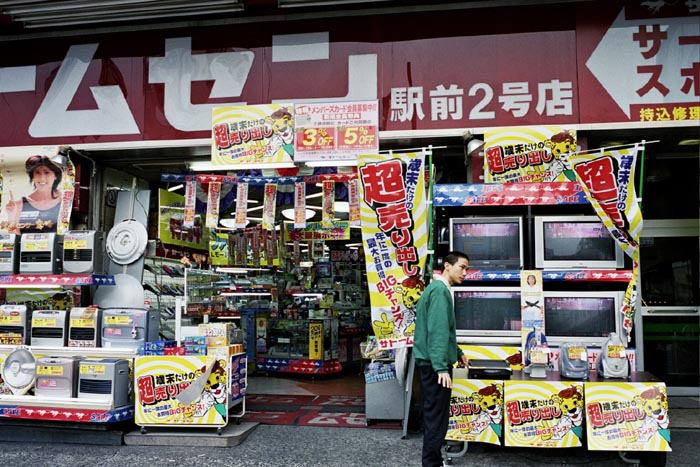
Akihabara is to Electronics what Las Vegas is to Gambling.
Location : Tokyo
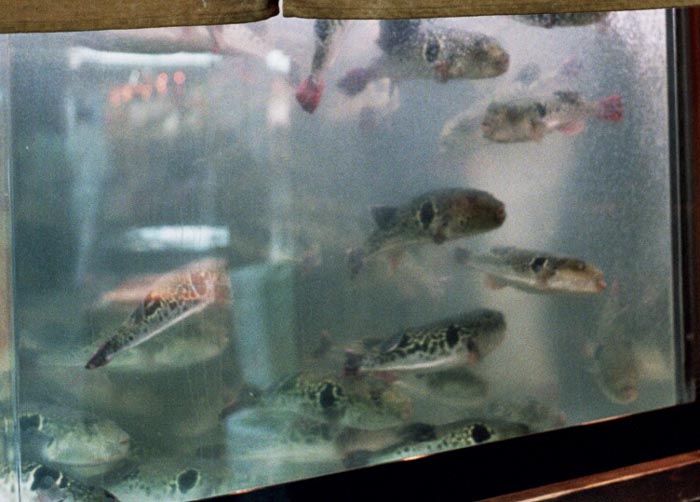
The Mystical Fugu (Pufferfish)
Location : Tokyo
Special licenses are given to qualified chefs to prepare a dish of Fugu. this makes fugu a very expensive meal ranging from $100USD to $200USD, one fish can cost from $20 to $50. If misprepared and the poison sac leaks poison into the meat you easily die eating the fish. Every year people die eating Puffer Fish. It is a unneverving feeling knowing that you might not survive the meal.
Location : Tokyo
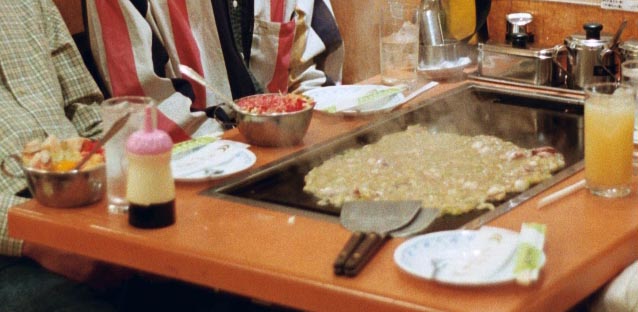
Okonomiyaki, a recent food fad, where the diners at this specialized and popular restaurant type cook a pancake like pizza with a grill. I am dining with my friend Sinichi Ishiguro and his family, Nobue (wife @ bathroom currently), and daughter Suzuka.
Location : Tokyo
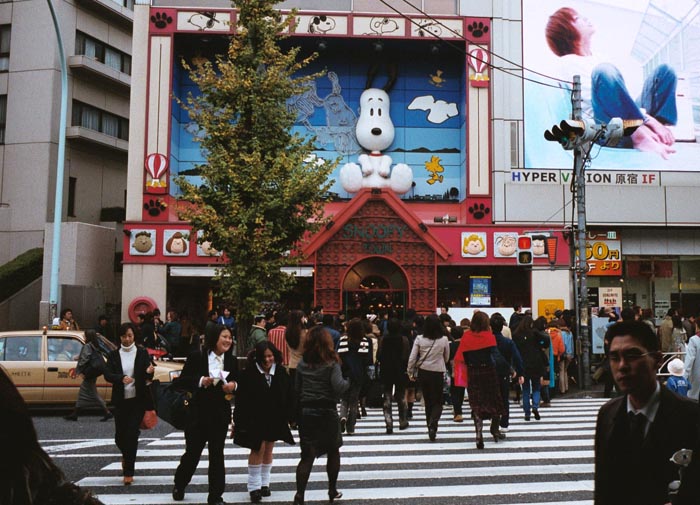
A "Snoopy town" in tokyo. Visiting Japan was in many ways very similar to visiting anywhere , USA. The product of a capitalistic modern global product market infrastructure. The McDonaldification and Coca-Colaification of the world. Notice everyone is extremely well dressed. I saw this everywhere, people smartly dressed.
Location : Hiroshima
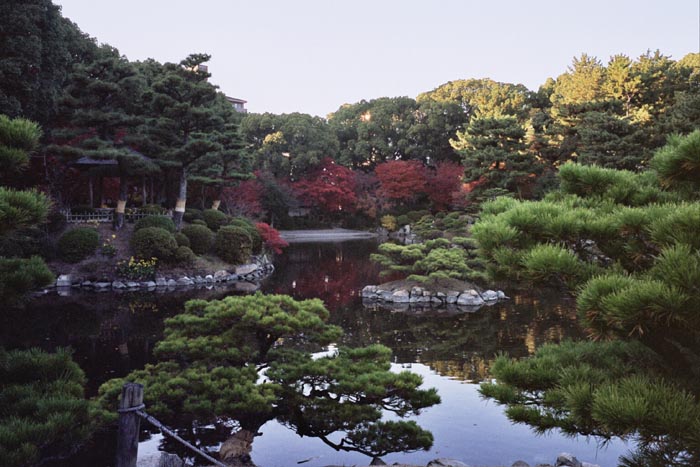
Beutiful Gardens are nestled in every modern city, often small but immaculate, and lovinginly manicured. A welcome break from the hustle bustle modern life. These parks and japanese gardens were so peaceful, I wanted to stay there much longer than the time I had.
Location : Hiroshima
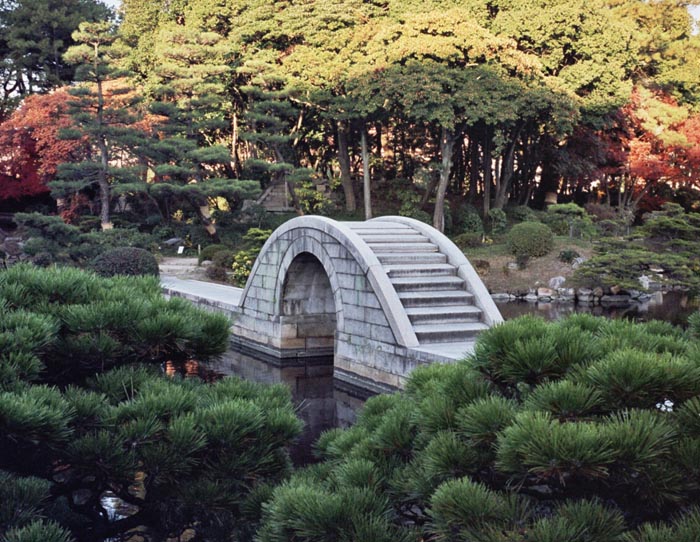
More photos of the amazing shukkien garden
Location : Hiroshima
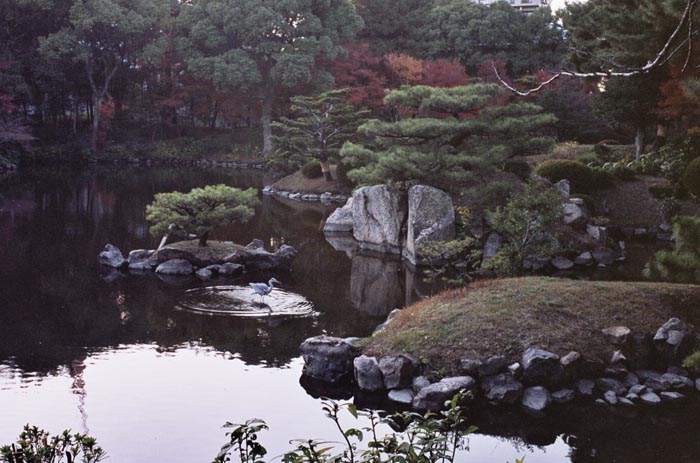
The immaculate simplicity has mental appeal.
Location : Hiroshima
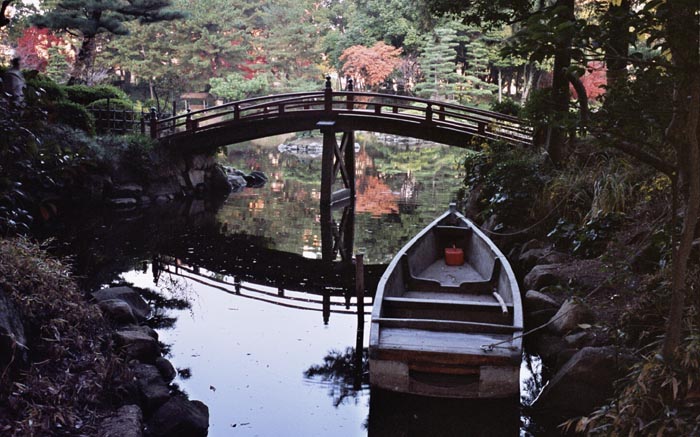
A norman rockwell photo of a boat in shukkien garden
Location : Tokyo
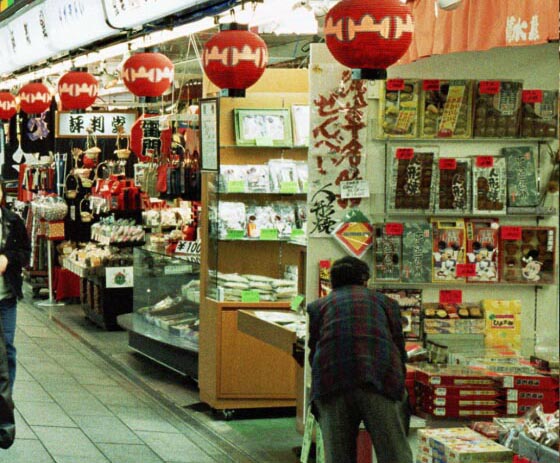
This little outdoor mall had dozens of stalls selling a variety of things, mostly touristy things. There were restaurants, dime stores, and an interesting store with a machine which made bun-cookies. It was a little griddle machine. There were stores here that you would find in any mall in the US. Pictured here are my friend Sinichi Ishiguro and his wife Nobue and daughter Suzuka.
Location : Tokyo
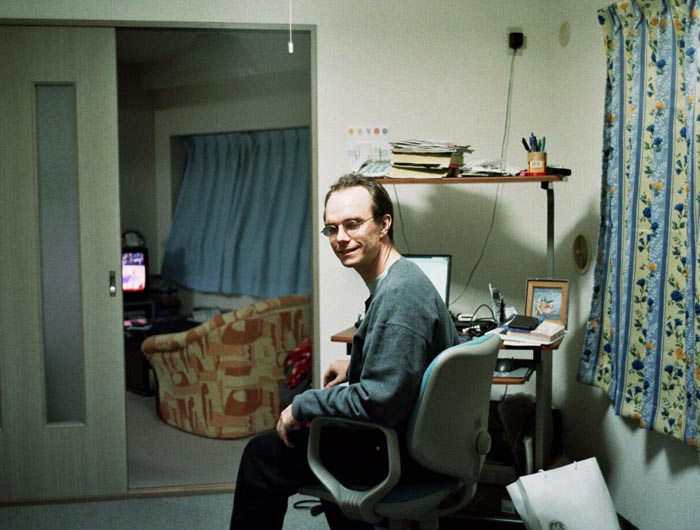
My friend Greg Lillegard, whom I stay with in Tokyo. Seen here working on his computer at his apartment.
Location : Yokohama
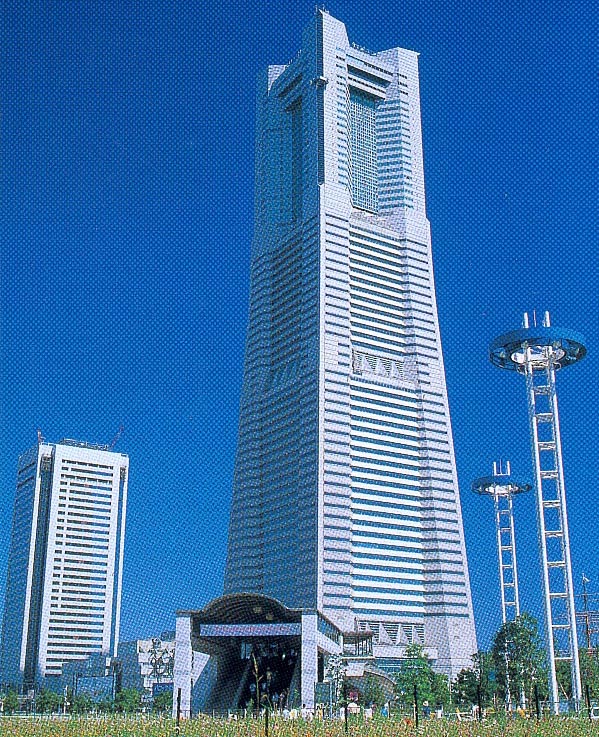
I stayed in the Yokohama royal hotel on the 57th floor. Yokohama was very much like a New York Burough. And in fact, everywhere I went was like I was in a New York Burough, Manhattan or a Dense New Jersey suburb. Japan is the most built up country you can possibly imagine. It cost $230USD per night to stay here.
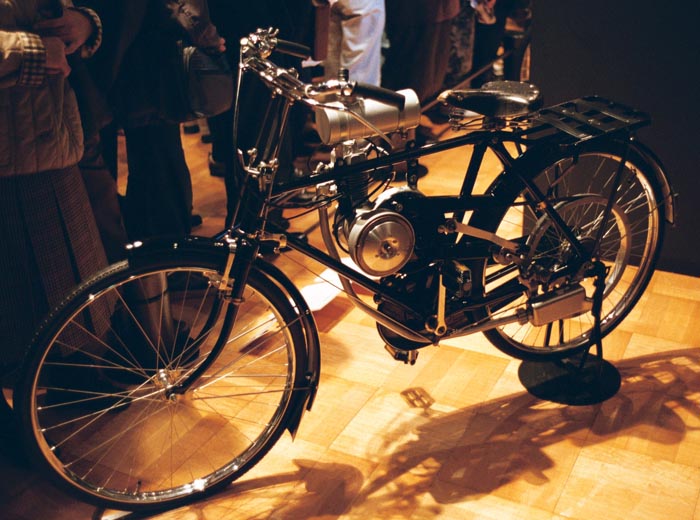
Location : Tokyo
One of the first Scooters made by Honda Motors.
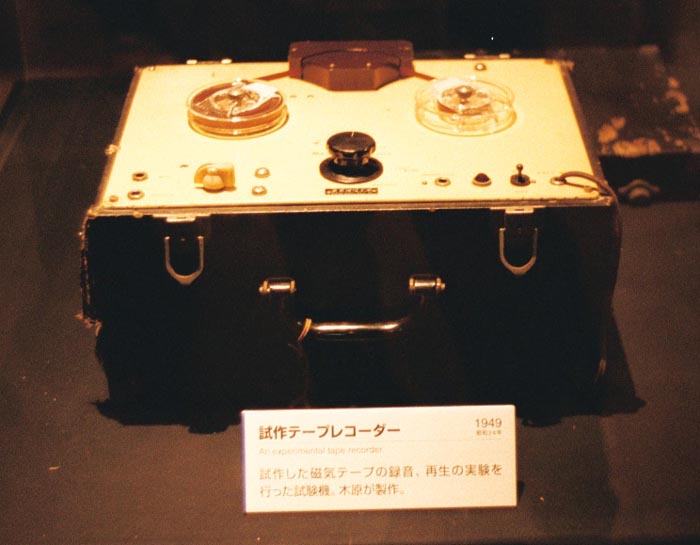
Location : Tokyo
"One of the first Sony Tape Recorders
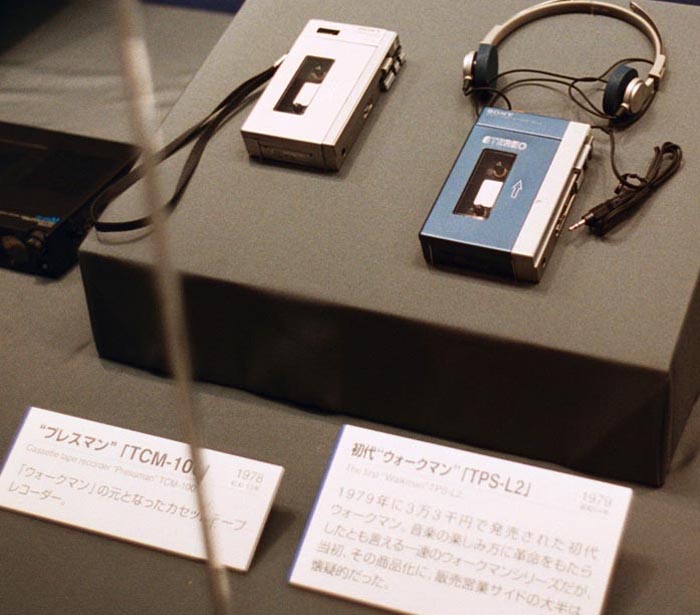
Location : Tokyo
Sony started a revolution in modern consumer electronics with the introduction of the Sony Walkman.
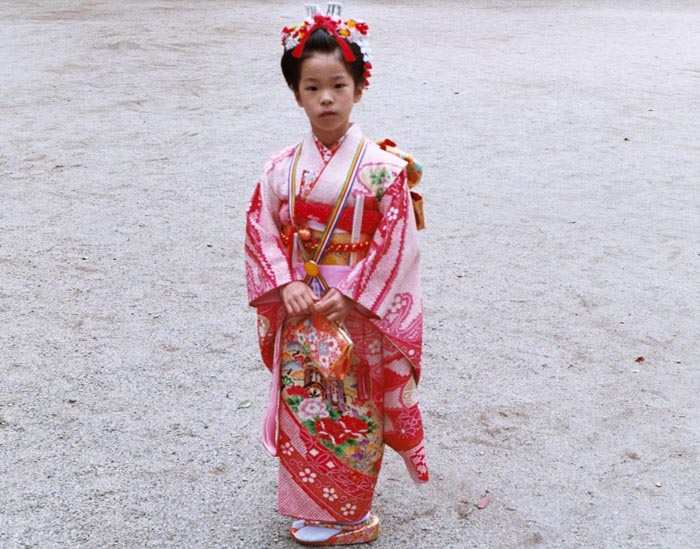
Location : Everywhere
Here you see a 7 year old girl dressed in the traditional Kimono. For the Japanese tradition is important. Their daughters age 7 and 3 are dressed in Kimonos and taken to temples, where the parents wish them prosperity. Their sons age 5 also participate.
Location : Everywhere
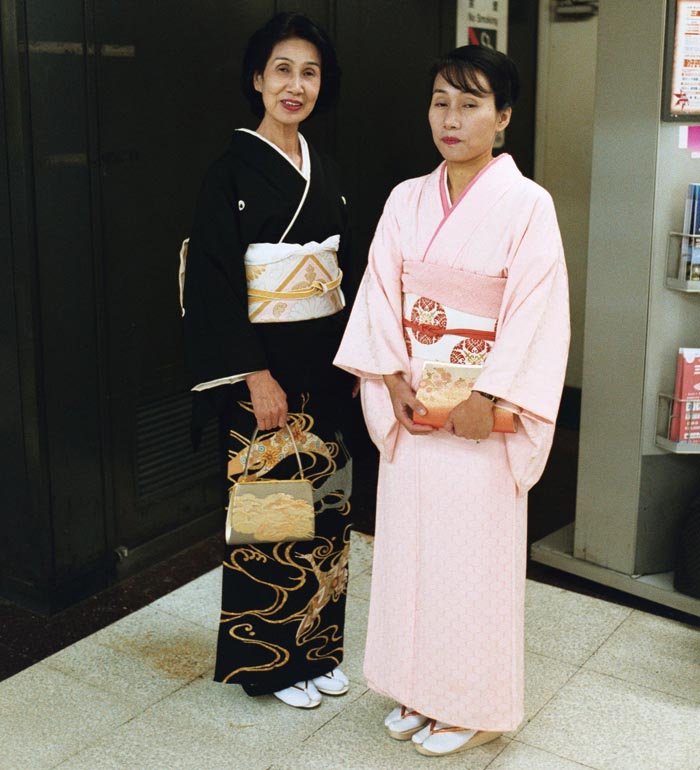
Every once in a while I saw ladies in Kimonos.
Location : Everywhere
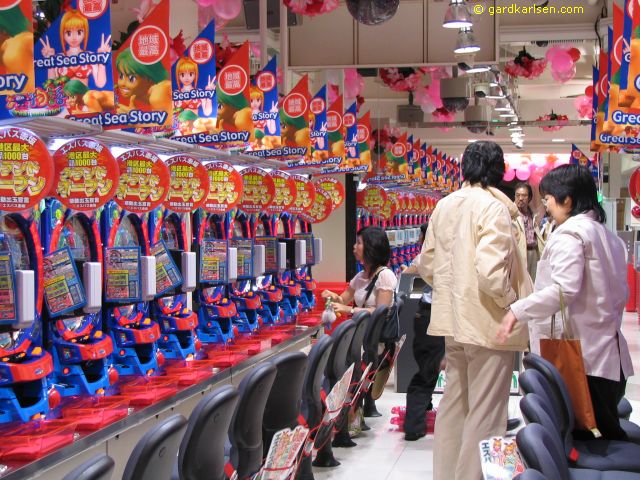
Pachinko Machines are extremely popular. I went in this hall, and they didn't let you take pictures here. This is just a generic picture of a Pachinko Parlor. But people would spend lots of money gambling for hours and hours sitting on front of these Pachinko machines with their tinkling ball bearings. I went in the morning, and stopped by again in the afternoon, many of the same people were still going at it.
Location : Everywhere
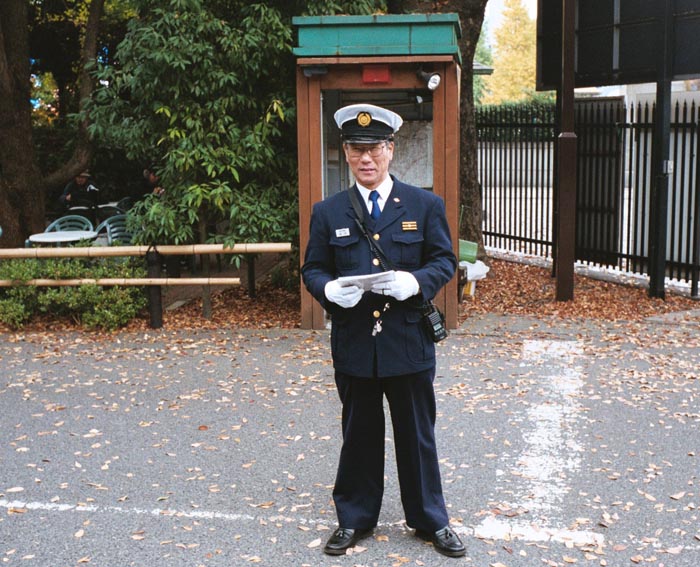
A Police Officer
Location : Everywhere
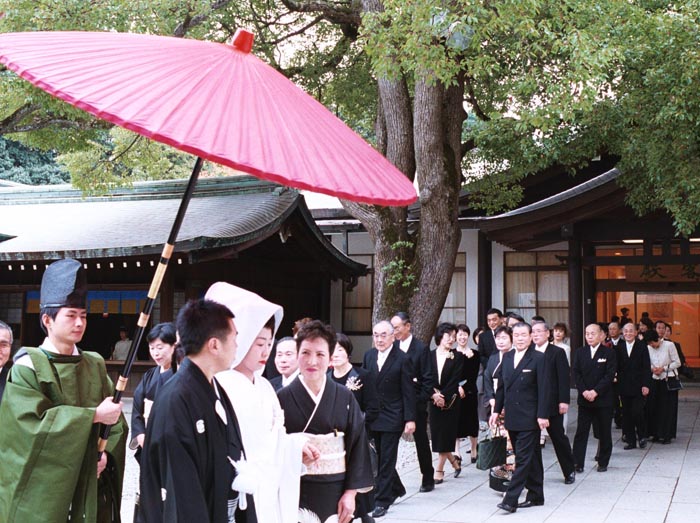
Here are newlywed couple at the Meiji Shrine in Tokyo The bride is in what looks to me like a bathrobe, a traditional wedding dress. I am uncertain of the significance of the Parasol, probably just an evolution of the pragmatic need to stay dry in inclimate weather during a wedding ceremony.
Location : Everywhere
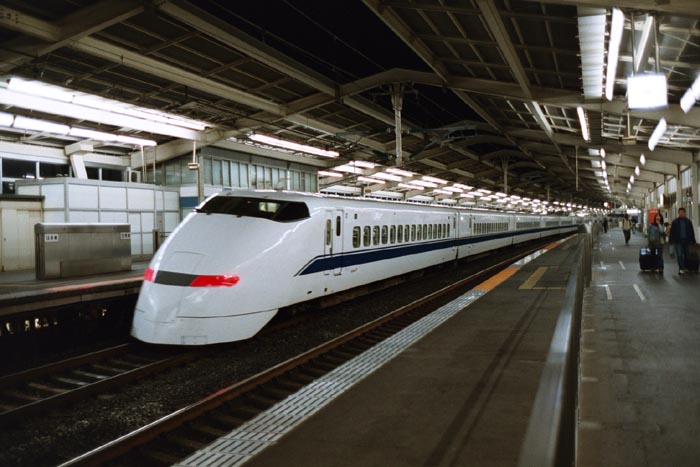
The bullet trains moved so fast, I missed 2 of them before I got my first photograph of one. Here is the tail end of one. I wasn't sure how the picture would turn out, as I set the camera at 1/500 of a second shutter speed. I tried different F stops and as fast a shutter speed as I could.
Location : Everywhere
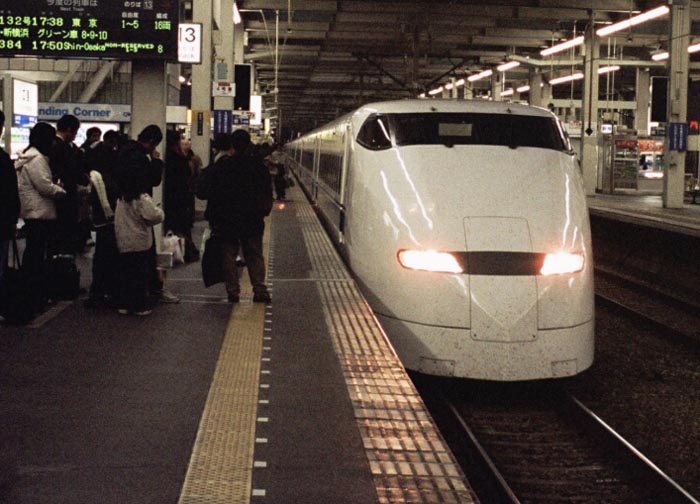
The bullet trains in Japan were amazing. I loved riding on them. A very smooth ride. The Hikaris which I rode were an older model which moved at 250km/h (150mph), the fastest trains Nozomi Shikansens moved 300km/h. (186mph). The trains moved so fast that anything near the train looking out the window seems as a blur. For me riding a shinkansen had the wonder and enjoyment of riding a bicycle for the first time without training wheels. Breathtaking.
Location : Everywhere
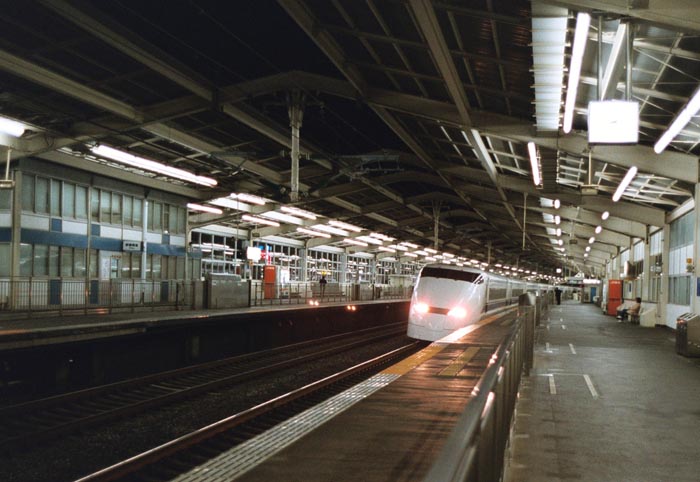
I could not have seen as much of Japan as I did without these wonderful trains. I had purchased a Japan Rail Pass which was absolutely invaluable. They allowed me to ride any Bullet Train, "normal" train and JR line buses. It made going from place to place much easier. Without having to buy tickets every time I wanted to go somewhere. I still had to ask at every station which track to take, and was constantly asking people for directions. Enligsh was in all of the train stops and signs. Some people shunned being asked for help, others were extremely helpful. One mistake I made was the JR rail pass only lets you sit in the first 5 cars. My first time in the train I set in car 11 , and the conductor belched a stream of Japanese at me . I said "sememasen, wakarimasen" (Sorry I don't understand), to which I was rewarded with another river of Japanese. But I heard the word Nagoya, and I said "Hirshima" (which was where I was headed). I had just been rejected from sitting on a reserve ticket only train going to Shimoda which took 6 hours, so I was afraid that i might get kicked off this train. It turns out your can get a reserve seat just by asking for it if you have a Japan Rail pass but you have to go to the JR office. 7day normal Japan Rail passes were $234.00; The excange rate when I went was 119.5 Yen per $. Some trains were astoundingly crowded, but the shinkansens were expensive, and everyone had their own seat, and fold down tray like an airplace seat. There were also food bars and people who would travel up and down the train selling food.
Location : Hiroshima
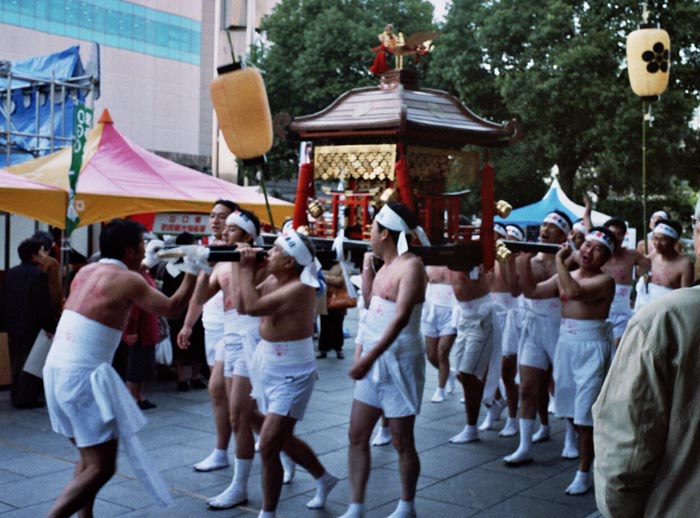
This was some sort of parade-ceremony with lively dancing.
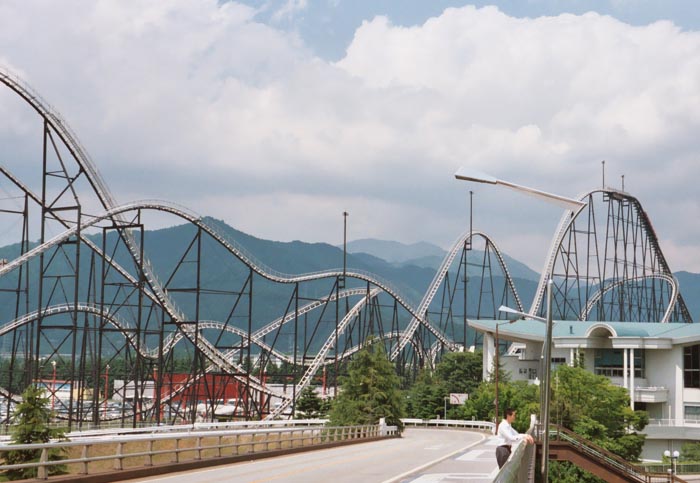
Location : Fujikyu Highland Park
The Fujiyama Steel Roller Coaster was the highest roller coaster when it opened in 1996. With a highest drop of 230 feet It was also the tallest in 1996 at 259 feet tall. Roller Coaster World Records
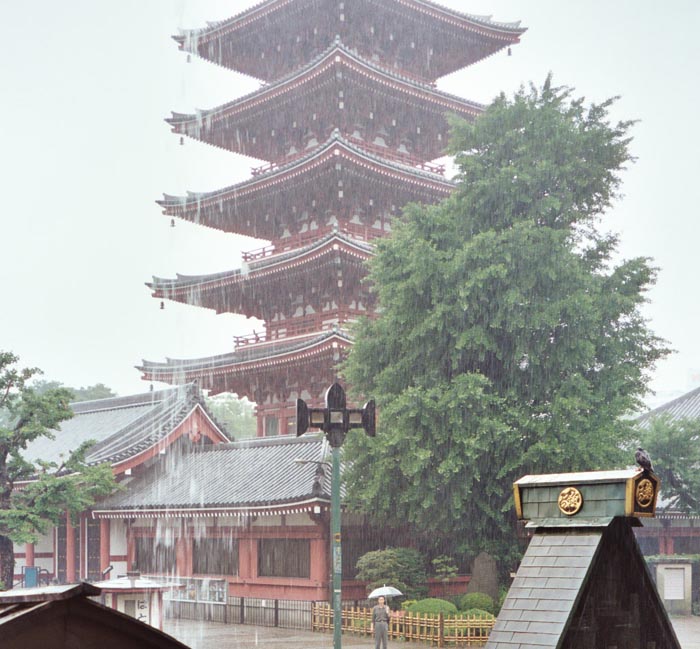
This temple picture taken at Asakusa
was taken during a torrential downpour.
Typhoon Linfa was making its way through
Japan, and not since 1965 was there a typhoon
so early in the season.
Typhoon Track Graphs
Manila Times
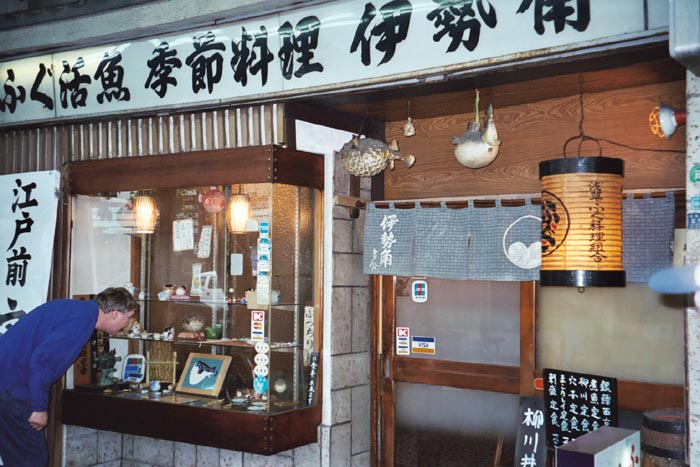
Pictured here Co-worker David Irving looking into the Fugu restaurant where I partook of Fugu November 2002.
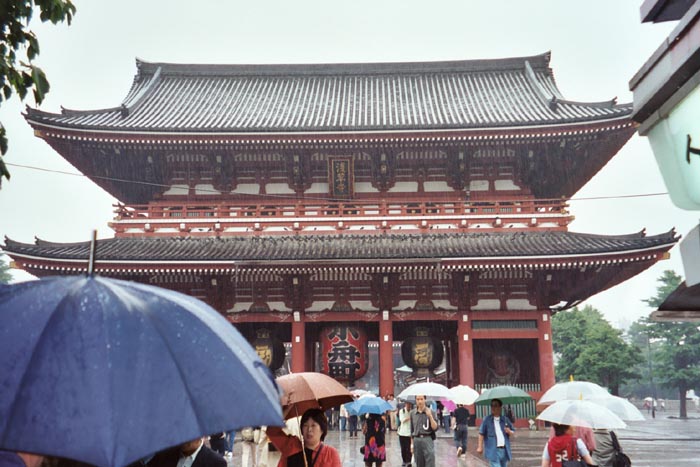
Main Temple of Asakusa
find out more : Asakusa
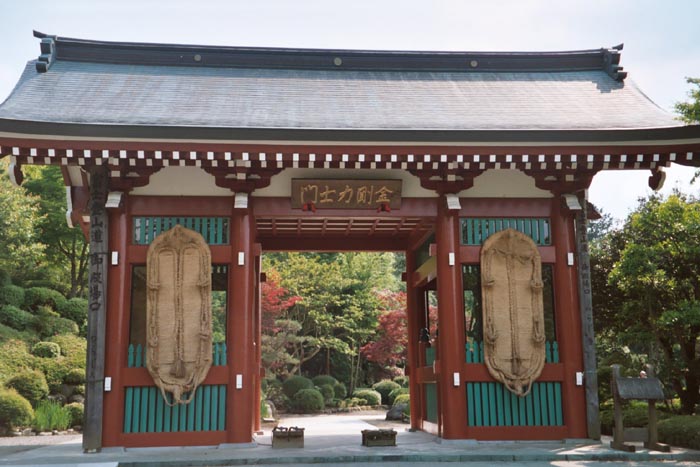
Location : Gotemba
Gateway to the park. This is a small , beautiful and peaceful zen garden inside the park.
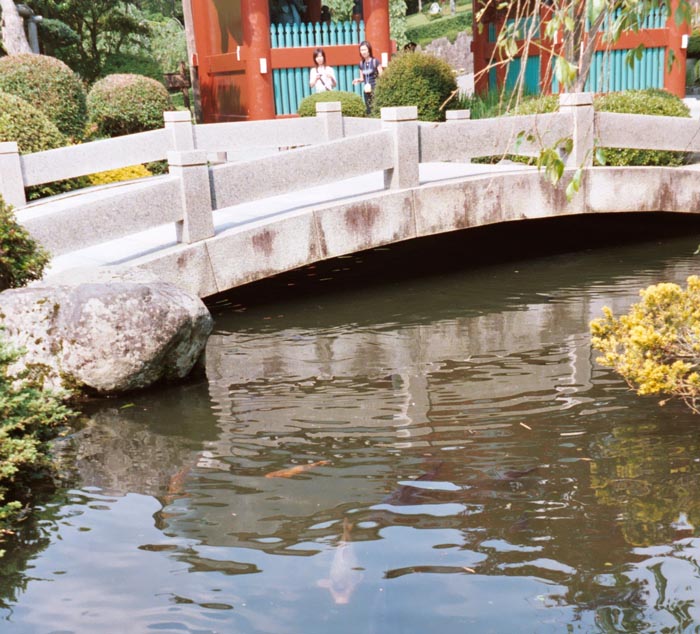
Location : Gotemba
Large goldfish swim under this bridge at Gotemba peace park.
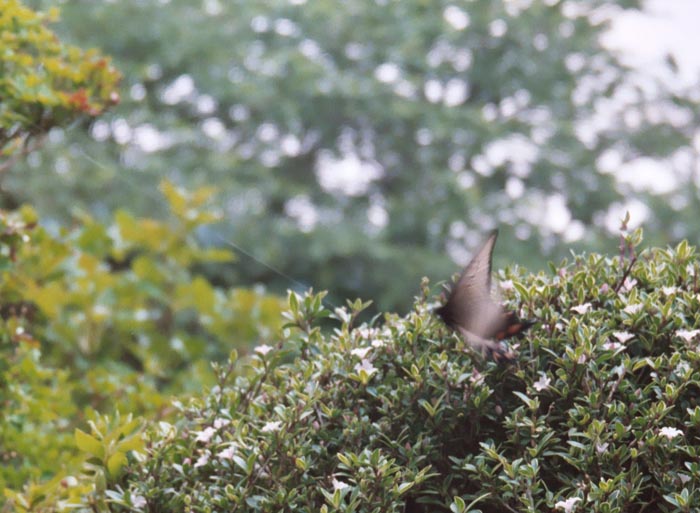
Location : Gotemba
Ready for take off , Gotemba peace park had a flock of butterflies.
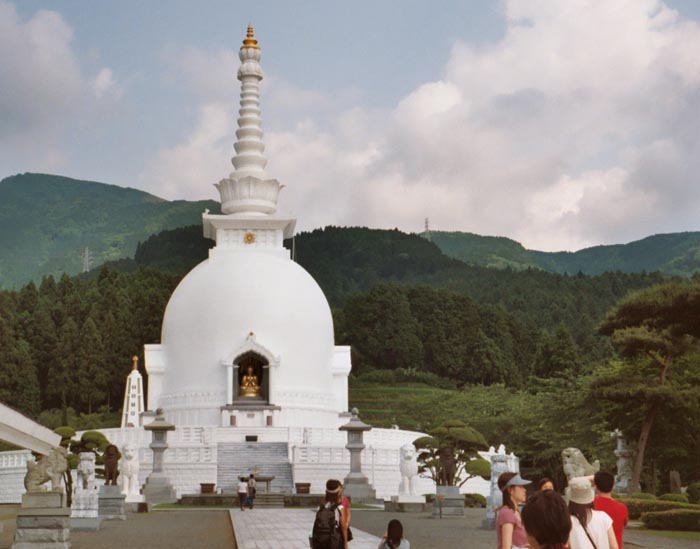
Location : Gotemba
Near the Gotemba Interchange on the Tomei Express-way it is a popular tourist sight all through the year. You can take a walk to the white Indian pagoda set on the hill. This elegant temple has some Buddha relics, which were presented by the first prime minister of India.
Location : Mount Fuji
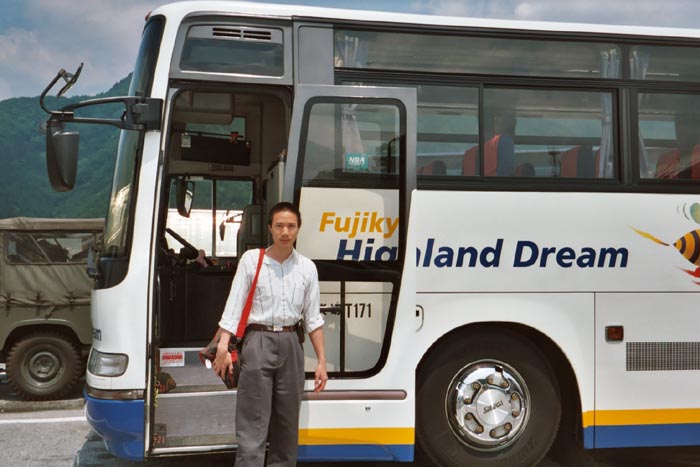
Taking Bus to Mount Fuji, $100USD for a day trip to Mt. Fuji
Location : Mount Fuji
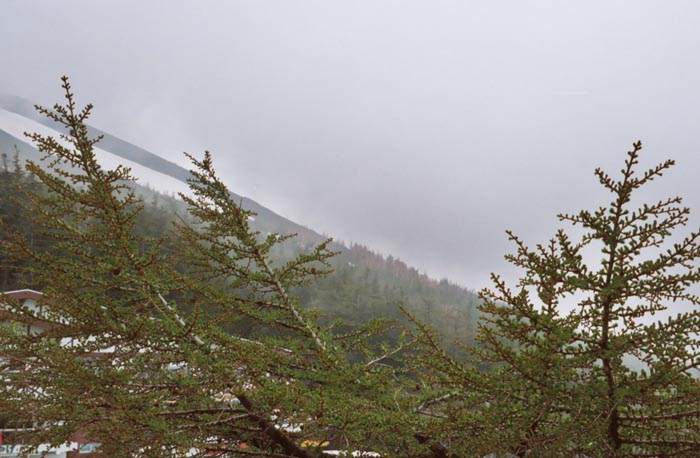
At station 5 , Mount Fuji is 3776 meters tall.
Mt. Fuji
I spent half the day getting there just to see fog! It was clear when we arrived, and as if possessed by a spirit, the fog rolled in within a matter of mintues. Station 5 is about 2/3 the way up Mt Fuji.
Location : Mount Fuji
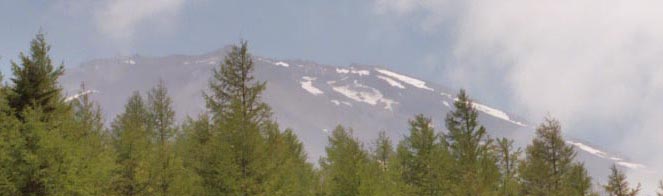
On the way back the fog clears, giving a clear shot of the top. Mt Fuji was closed for hiking to the top because of precarious snow conditions, which only thaw out in July.
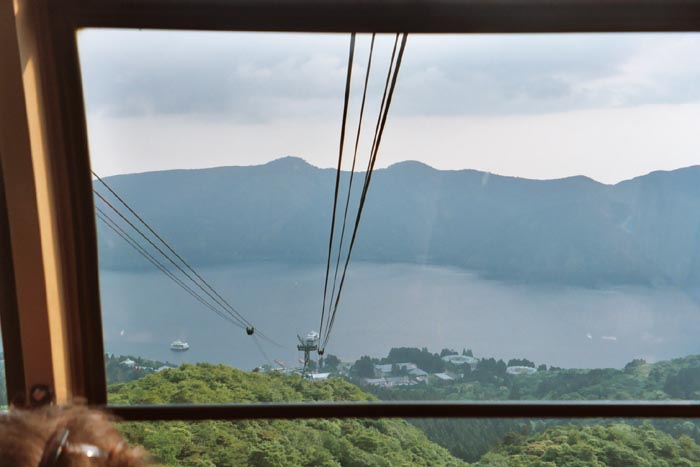
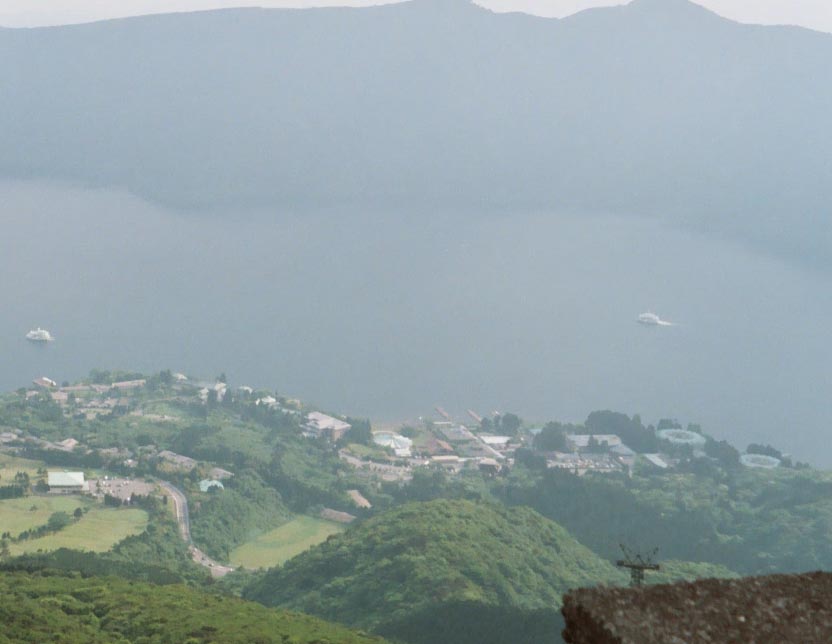
Hakone is an active volcano about 30km southeast of Mt. Fuji. Volcano research center The skyride to the top of Mount Hakone offers a breathtaking view of nature's handiwork.
Famous the world over for having the world's most intricate wood craftsmen, Hakone produces the most exquisite works of wood available. They are imported to America via the Cleverwood company
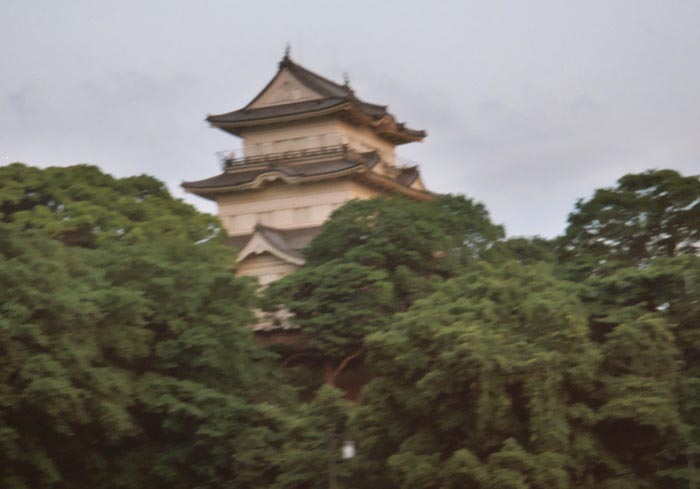
A nearby castle commands the mountain skyline of Hakone.
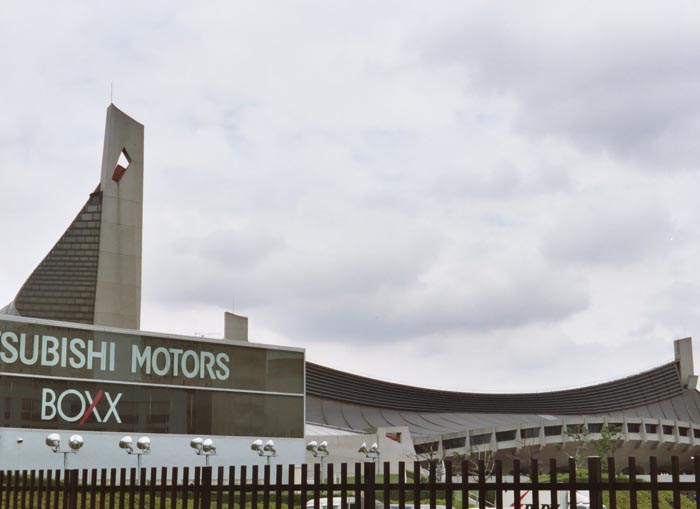
A vast sprawling park with an stadium at its center. The site of a ecological conference on the day I visited.
Location : Tokyo
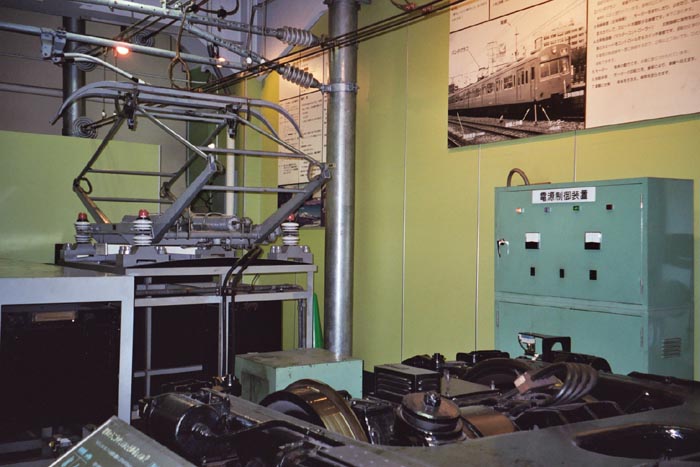
The Tokyo Transportation Museum. listed as one of the top 10 museums at the Tokyo Essentials website
Location : Tokyo
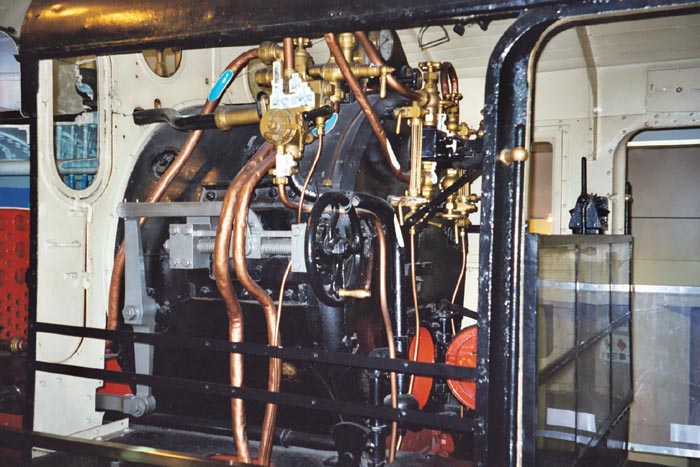
Pictured here is a cut-away of a steam locomotive. The precision cutaway exhibit, exemplifies the meticulous craftsmanship of the Japanese people. There ability to explain and display the history of science is unparalleled. Like most things in Japan, they pack a lot of value into a small space. This small 3 floor museum has something which will astound and amaze your average American : working exhibits! No less than three Virtual reality displays of fully working trains. One emulating a subway train, another a above ground train, and yet another a Shinkansen, bullet train. Throngs of people mobbed the museum. Even on a typhoon day. Well throngs of people pour over the sprawling cityscape everywhere in Japan, so I suppose this was business as usual.
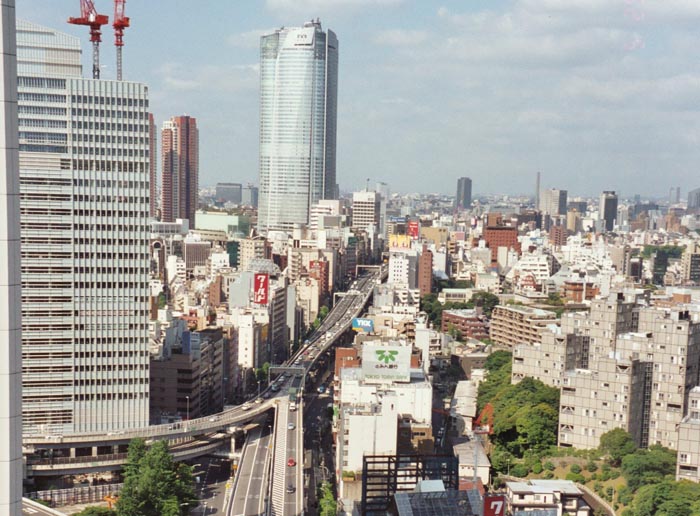
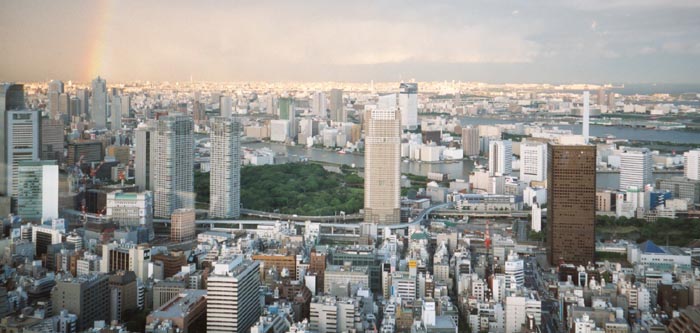
A view of Tokyo (The Roppongi district). Tokyo is full of skyscrapers, the true concrete jungle.
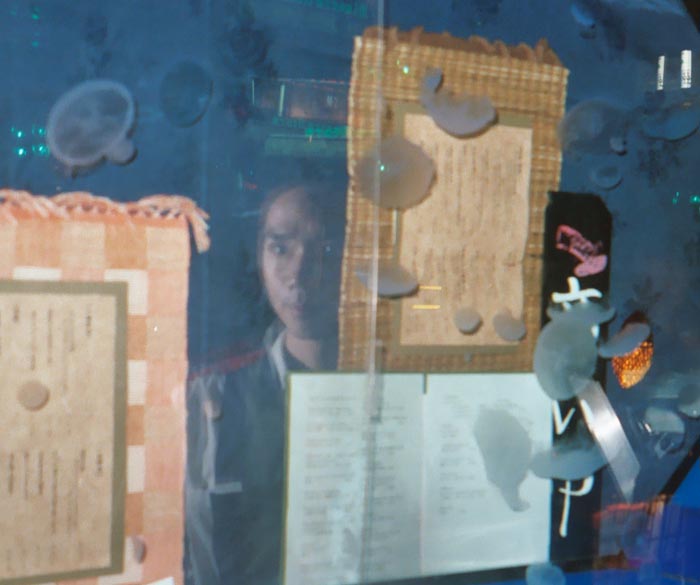
Oriental restaurants like to keep live fishtanks, to show customers that their food (fish) is fresh. Pictured here a tank full of Jellyfish. Beautiful and Deadly.
Location : Shibuya
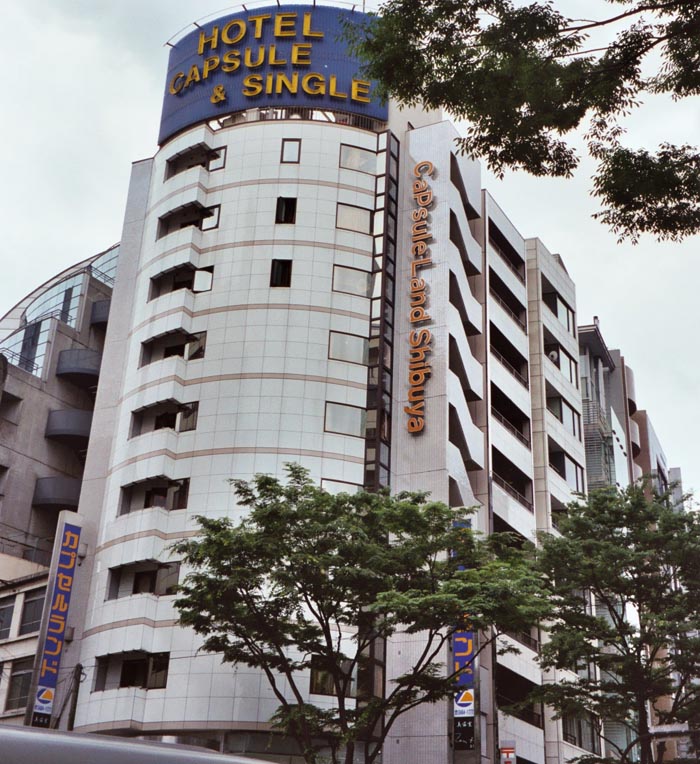
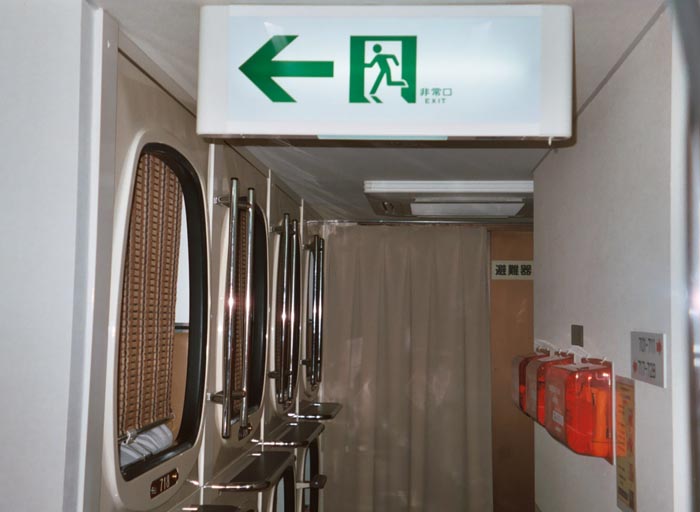
The capsule hotel pictured here is a 8 story hotel, packing humanity in like the sardines. The epitome of efficiency.
Capsule Land Shibuya
Address: 1-19-14 Dogenzaka Shibuya-ku
Phone: 03-3464-1777 / Fax: 03-3464-7771
Access: JR line Shibuya Station
Price: 3700 yen per night
Note: sauna and bath / individual rooms / no female guests / 140 capsules
Location : Shibuya
These washing machine rooms of the famous capsule hotels are about 6 foot 3" long and about 4 foot tall/wide. Shared bathrooms, communal washrooms, lockers for shoes and luggage.
Listing of Capsule Hotels
Location : Shibuya
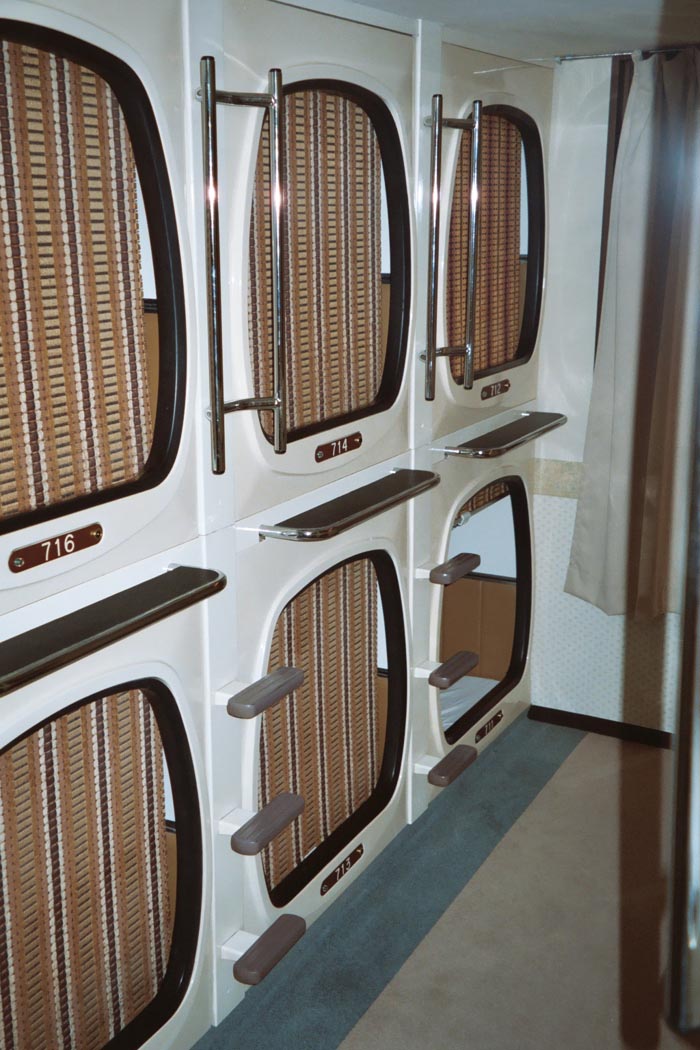
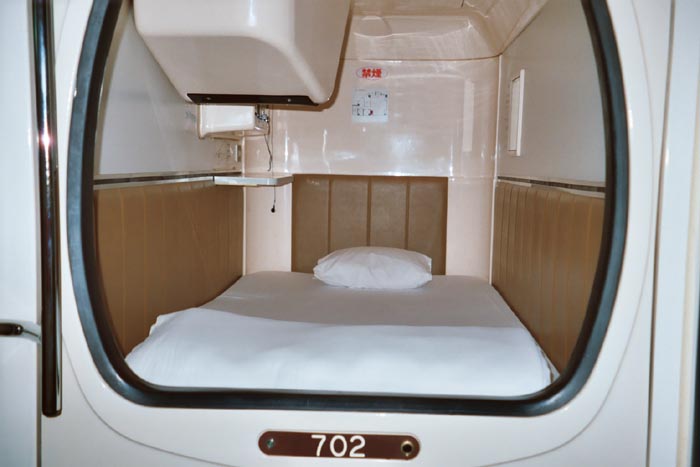
Stacked two high, my "room" was number 702. I had to climb up 3 steps to my coffin, er, room. The typical stay in Tokyo was about $220USD my stay here was about $39USD. Oddly enough it was my best night of sleep in Japan.
Location : Shibuya
I woke up at 2PM to take these pictures. My "Room". There is a television (pictured upper left), radio, light, and air circulation fan. The "Door" is a rolling mat with a little catch at the bottom.
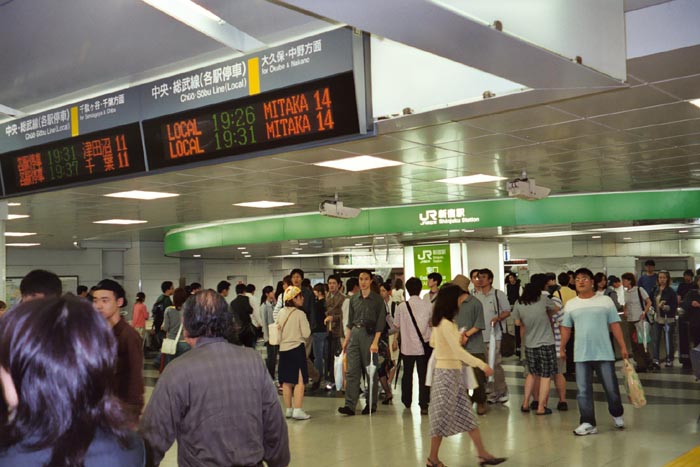
The tokyo subway system is among the cleanest and smoothest running of any subway that I have ridden. The digital dashboard tells you when the next train will arrive. This is the busiest place in the WORLD , two million people pass through this pass through this point every day.
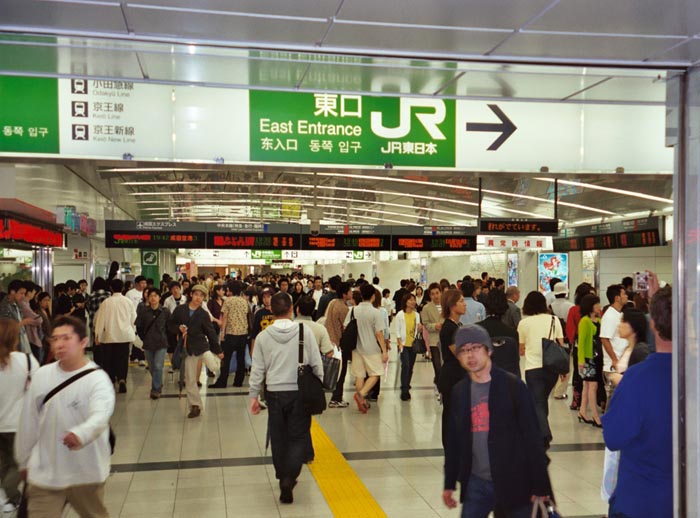
This is the busiest place on the earth. 2 million people pass through Shinjuku everyday.
Find out more at the
Tokyo Essentials webpage
The city of Tokyo is kind of like a giant outdoor mall.
Location : Tokyo
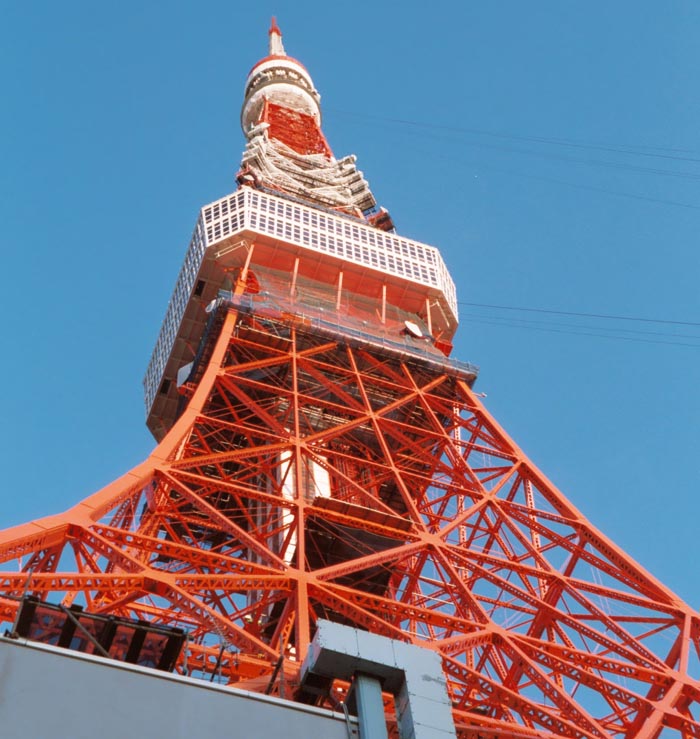
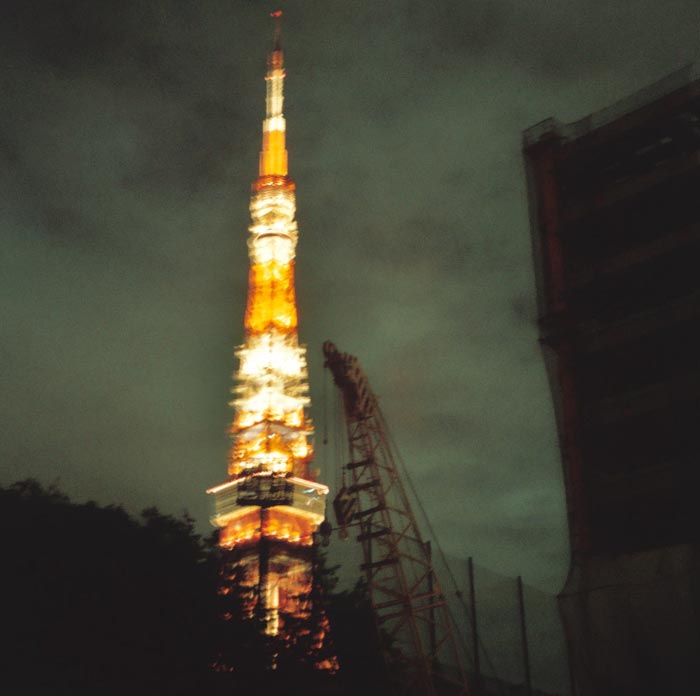
Built in 1958 it is the tallest self-supporting steel structure in the world. At 333 meters it is 33 m taller than the Eiffel tower and about half the weight 4,000 tons. The main observatory is 150 m above the ground, the special observatory at 250 m up. See this website : Tokyo Tower
Location : Tokyo
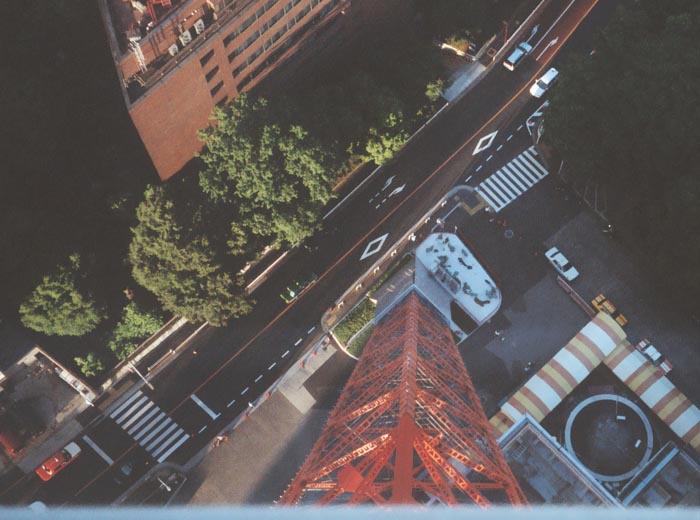
Looking down on the human ants from the Tokyo tower, Bird's Eye view at 100 meters (328 feet) up.
Location : Tokyo
A rainbow after the typhoon linfa.
Location : Tokyo Tower
Night views of this pillar of steel no longer dominate the surrounding skyscrapers, but stand out like a christmas tree. The views of Tokyo at night from the Tower are spectacular. Unfortunately I did not have my manual camera with me. If you go remember to set shutter speed at 1/250 because of tower sway at the upper observation deck, and at night F1.6
Location : Tokyo Tower
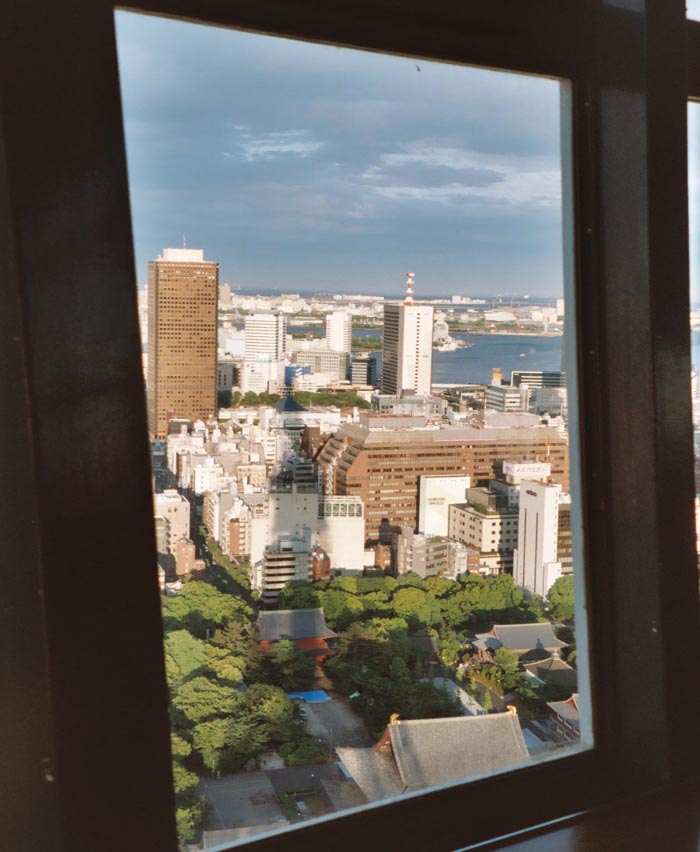
A portal view looking out of the observation deck of Tokyo Tower. The shadow of the 333 meter tower looms over the cityscape.
Location : Osaka
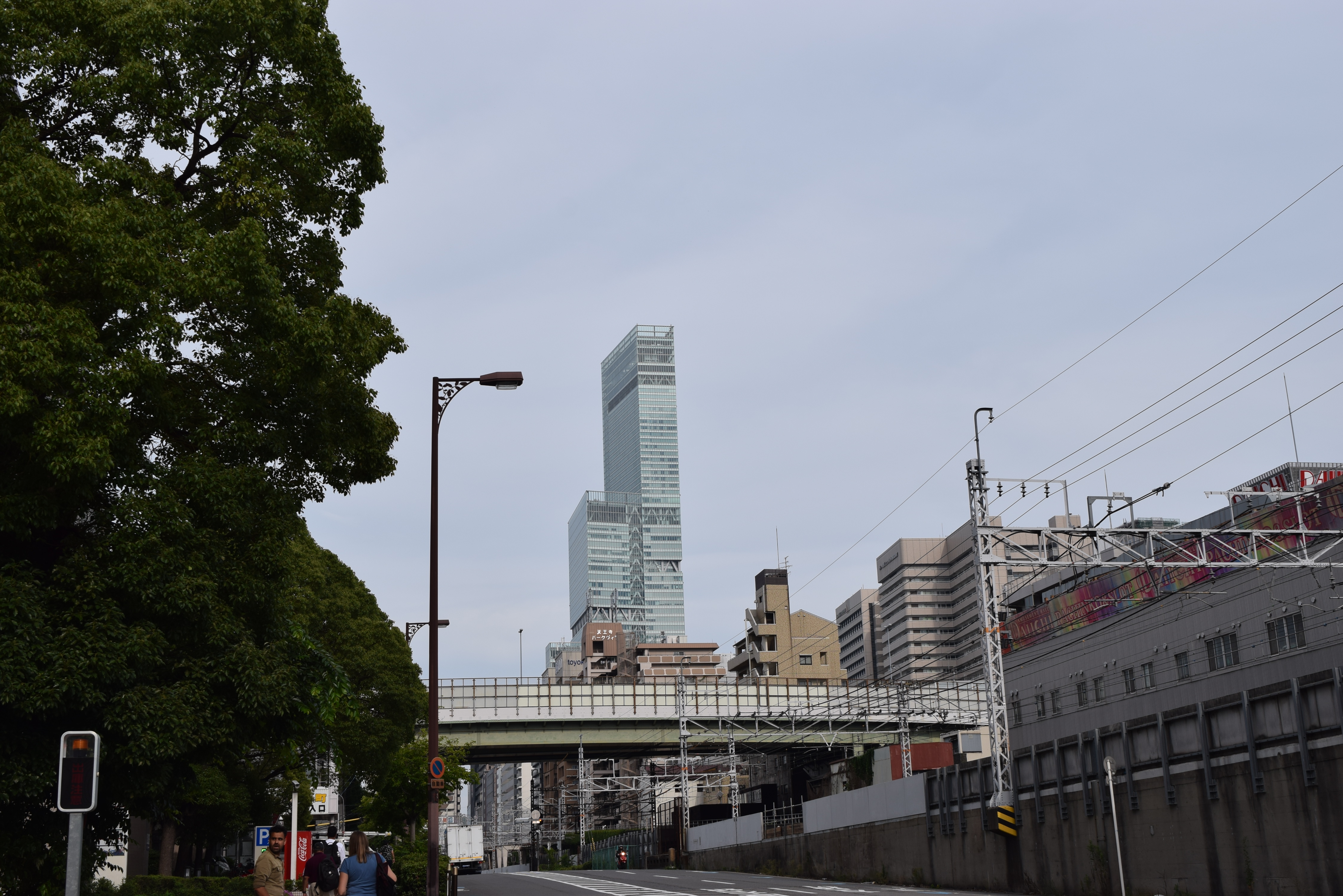
Harukas is a skyscraper located in Abeno-ku Osaka. The building is 300 m (984 ft) tall and has 62 floors; it was the tallest building in Japan from 2014 to 2023. The name of the building Harukasu means "to brighten, to clear up". Harukas is a multi-purpose building and there are many shops in the building. Picture Taken June 23, 2023
Location : Osaka
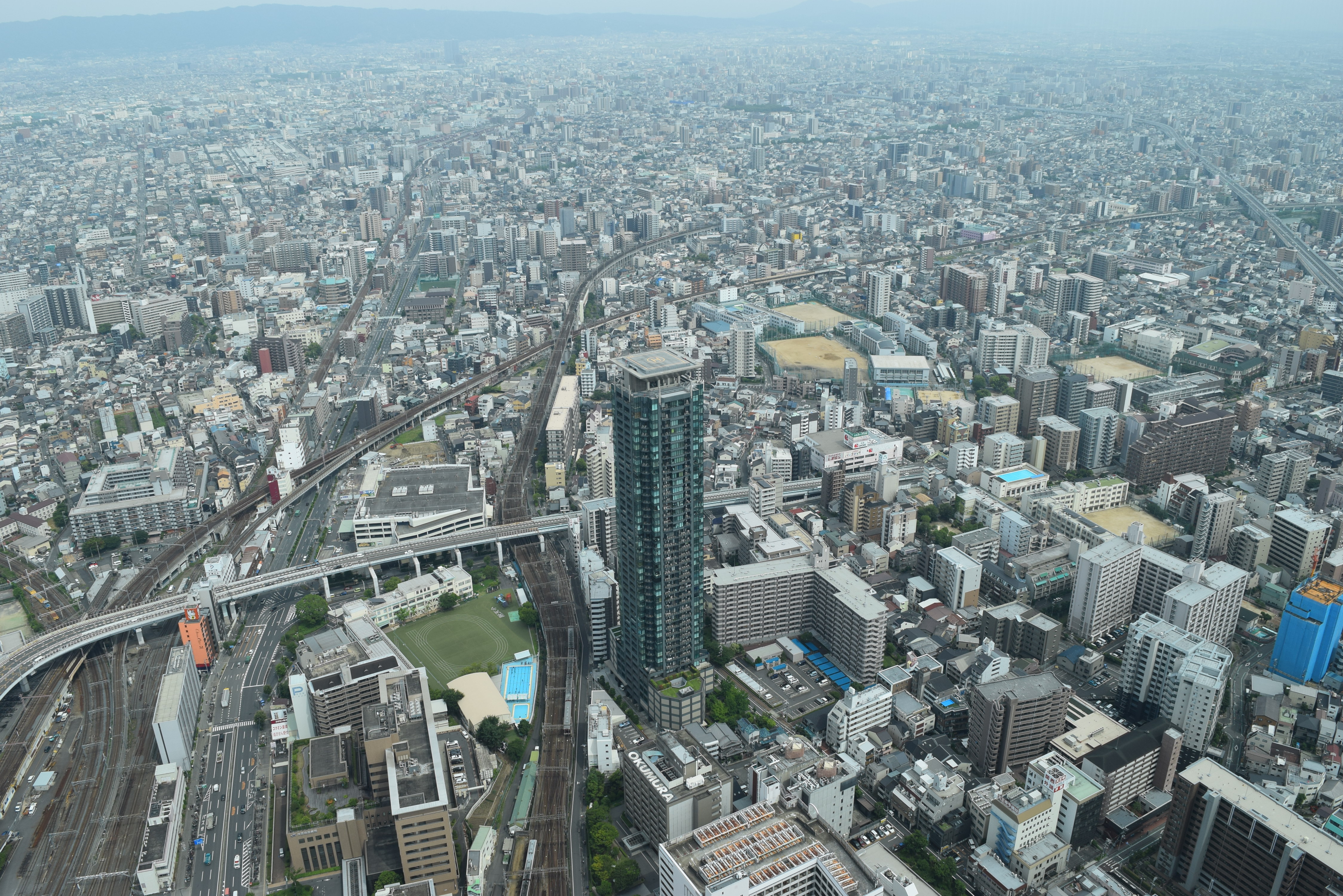
A view from the Observatory at Harukas 300. Floors 58 to 60 are the Observatory and offer amazing views of Osaka. There is a Sky Garden and Observatory magnifiers. Picture Taken June 23, 2023
Location : Osaka
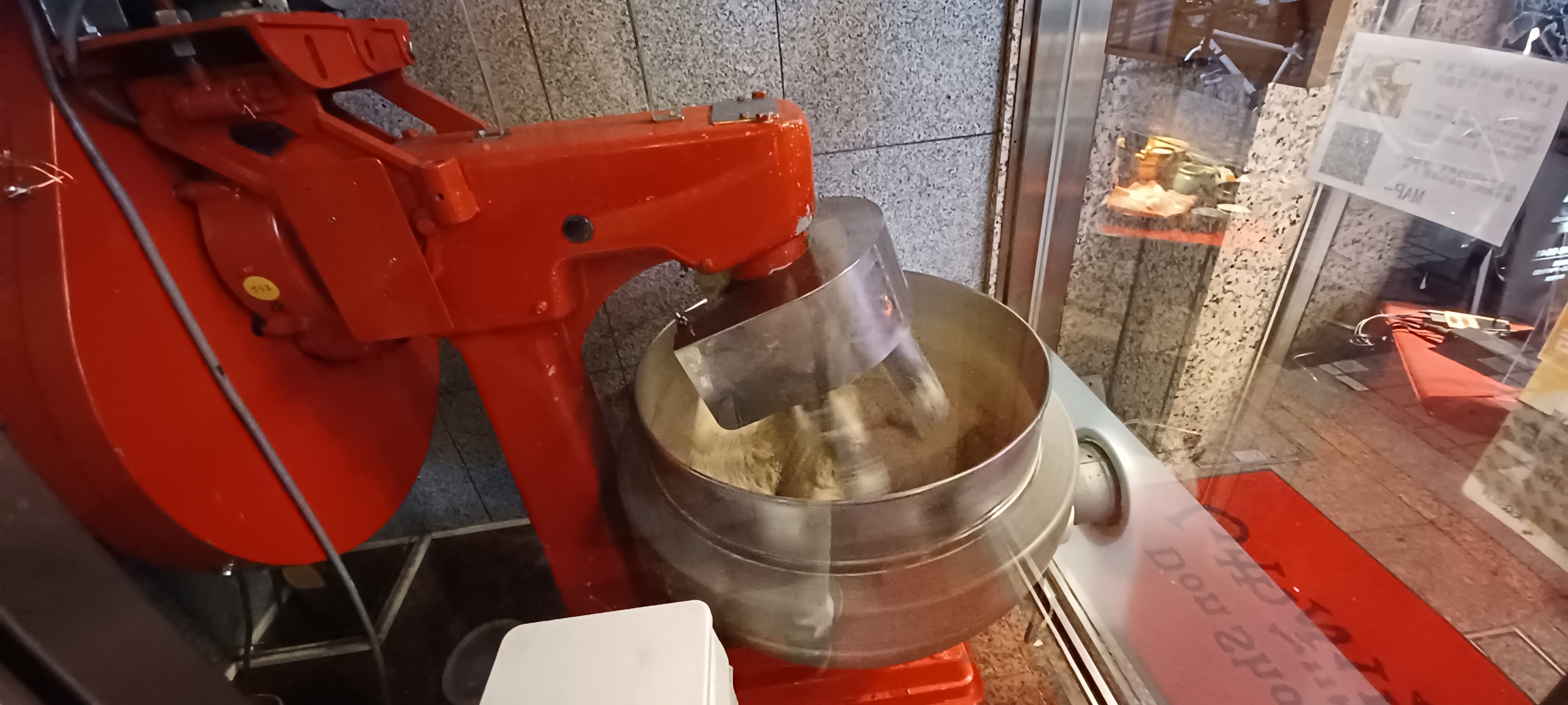
This is a Soy Sauce Machine that I ran across at a restaurant in Dotonburi Picture Taken June 23, 2023
Location : Himeji Station
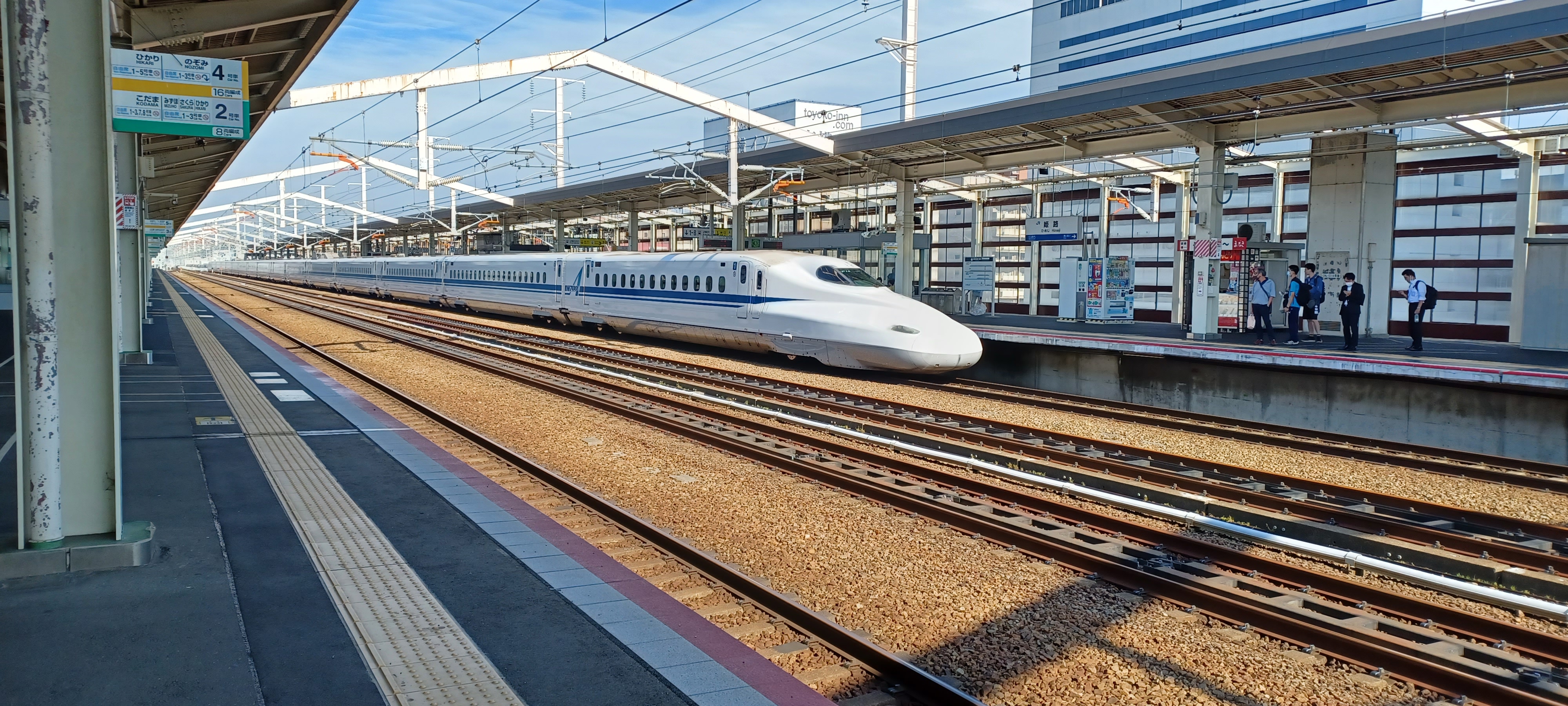
This is a picture of the Nozomi Shinkansen at Himeji Station. Starting in 1964, the high-speed rail network has expanded to consist of 2,830.6 km (1,758.9 mi) of lines with maximum speeds of 240–320 km/h (150–200 mph). There are services: Express (Nozomi, Mizuho), Semi-Express (Hikari, Sakura), and Local (Tsubame, Kodama) I took the Express services which stop at only the very largest stations and, thus, are the fastest Shinkansen services measured by average speed. Picture Taken June 18, 2023
Location : Fugetsu Restaurant, ATC Mall, Osaka
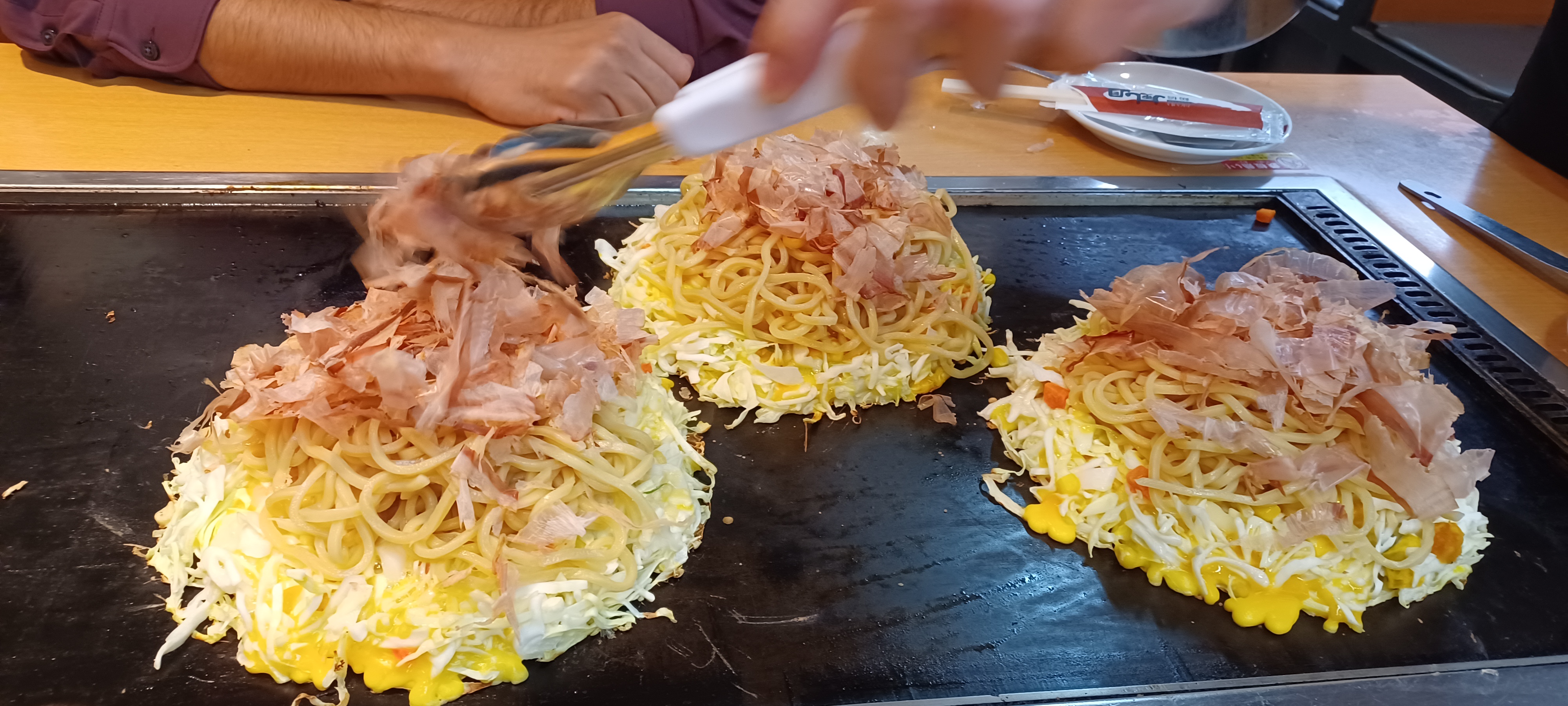
This is a picture of Okonomi-Yaki, Modan-Yaki (with Noodles) at the Fugetsu Restaurant in the 3rd floor of the ATC Mall in Osaka. Osaka is known for its Okonomi-Yaki. There is a cabbage, egg and a sort of batter that creates the "base" of the "omlet-pancake". You can get various vegetable and meat toppings and then they add noodles. It is grilled on both side in front of you, and then a sort of white mayonnaise and a sweet barbeque sauce is spread on top. The process takes about 15-20 minutes of cooking time.
Location : Osaka
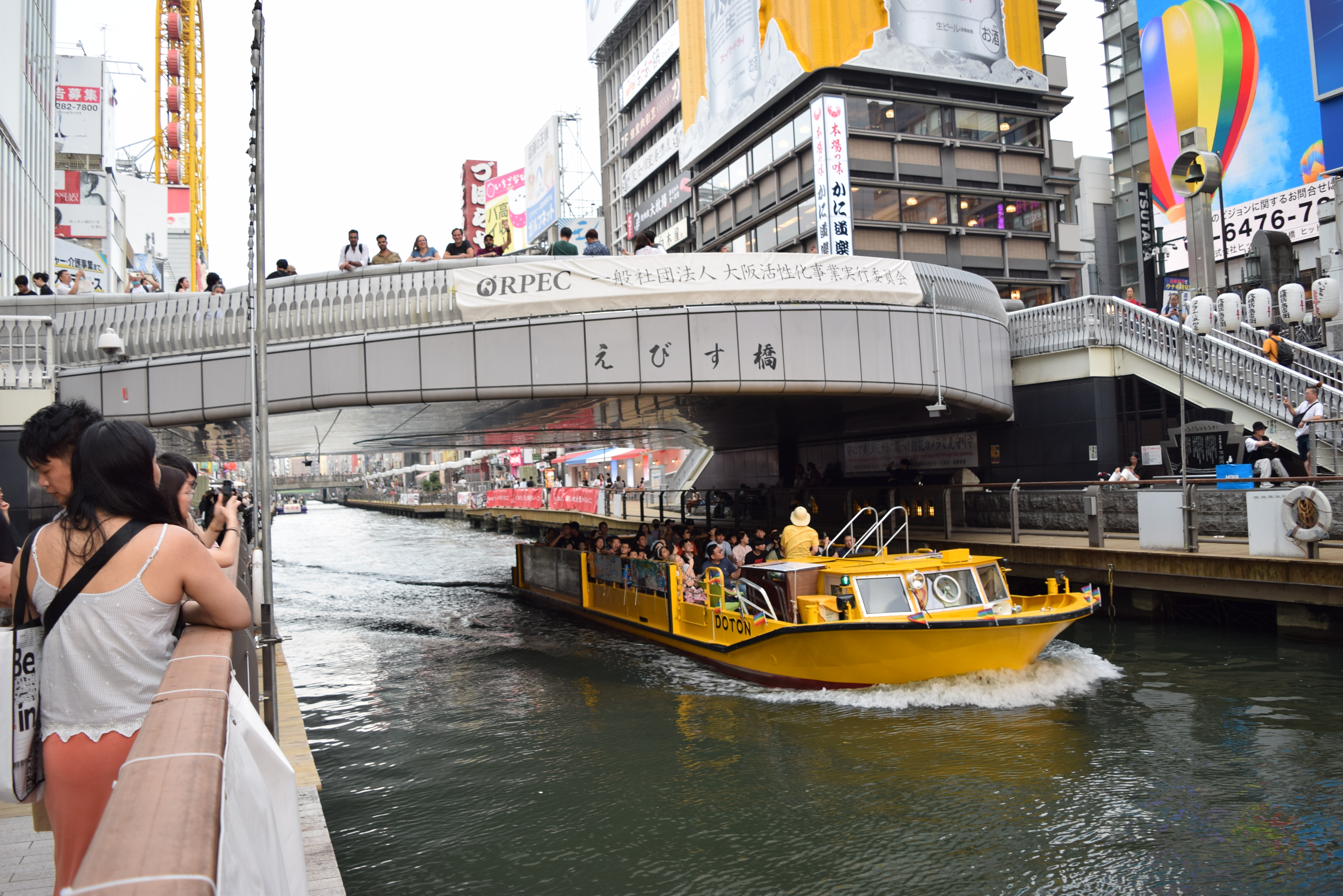
Dotonbori is one of the principal tourist destinations in Osaka, Japan, running along the Dotonbori canal from Dotonboribashi Bridge to Nipponbashi Bridge in the Namba district of Osaka's Chuo ward. It was a theater district, butis now a popular nightlife and entertainment area. Some of the most notable restaurants are Kinryu Ramen, Kani Doraku, Otakoya, Zubora-ya, Dotonbori Ramen Taishokudo, Hariju, Imai, and Cui-daore
Location : Nagasaki City, Nagasaki Prefecture, Kyushu Island
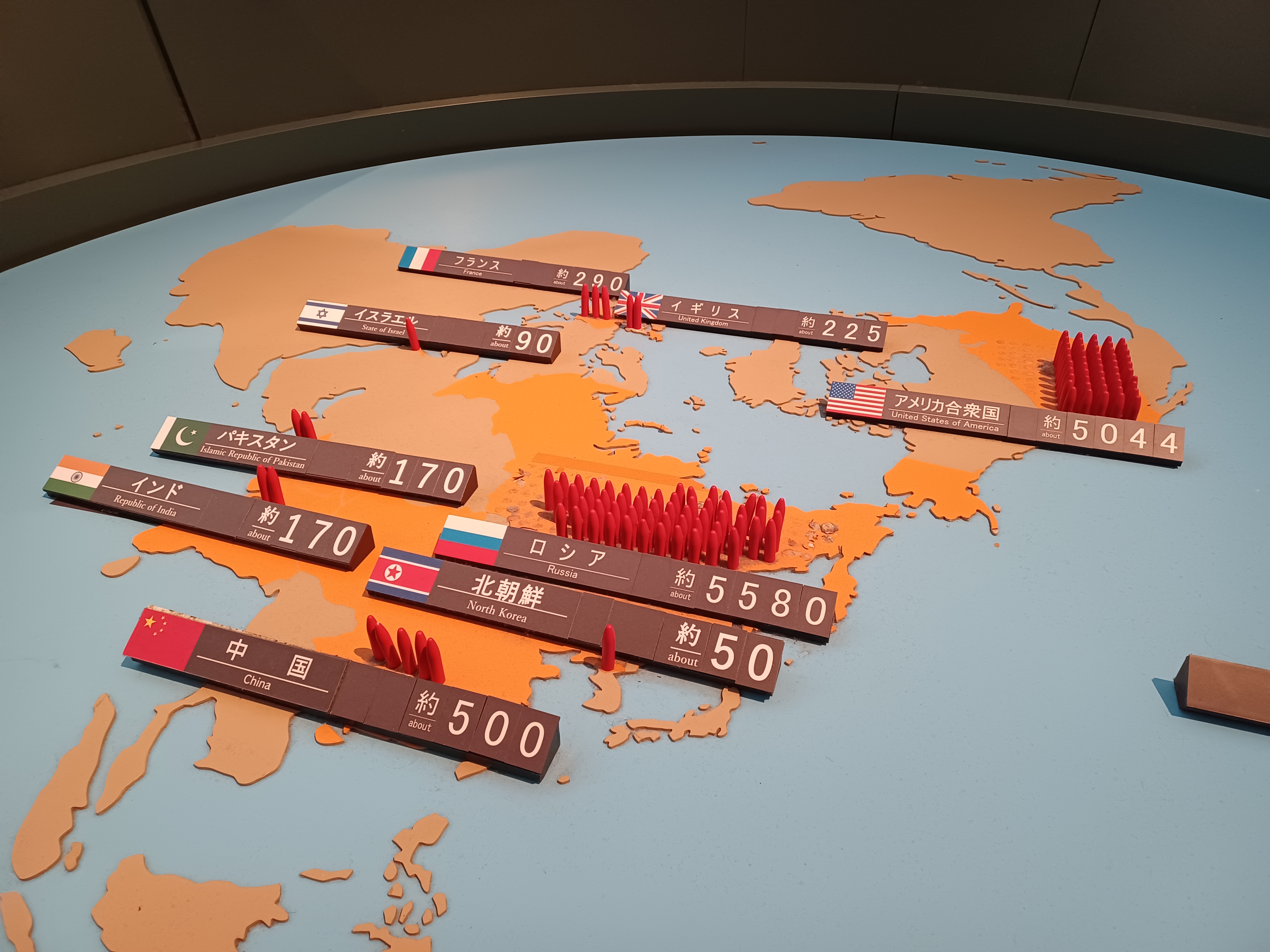
A display at the Atomic Bomb Museum showing stockpiles of various countries: 5,044 USA; 5580 Russia; 500 China; France 290; UK 225; India & Pakistan 170; Israel 90; DPRK 50
Location : Nagasaki City, Nagasaki Prefecture, Kyushu Island
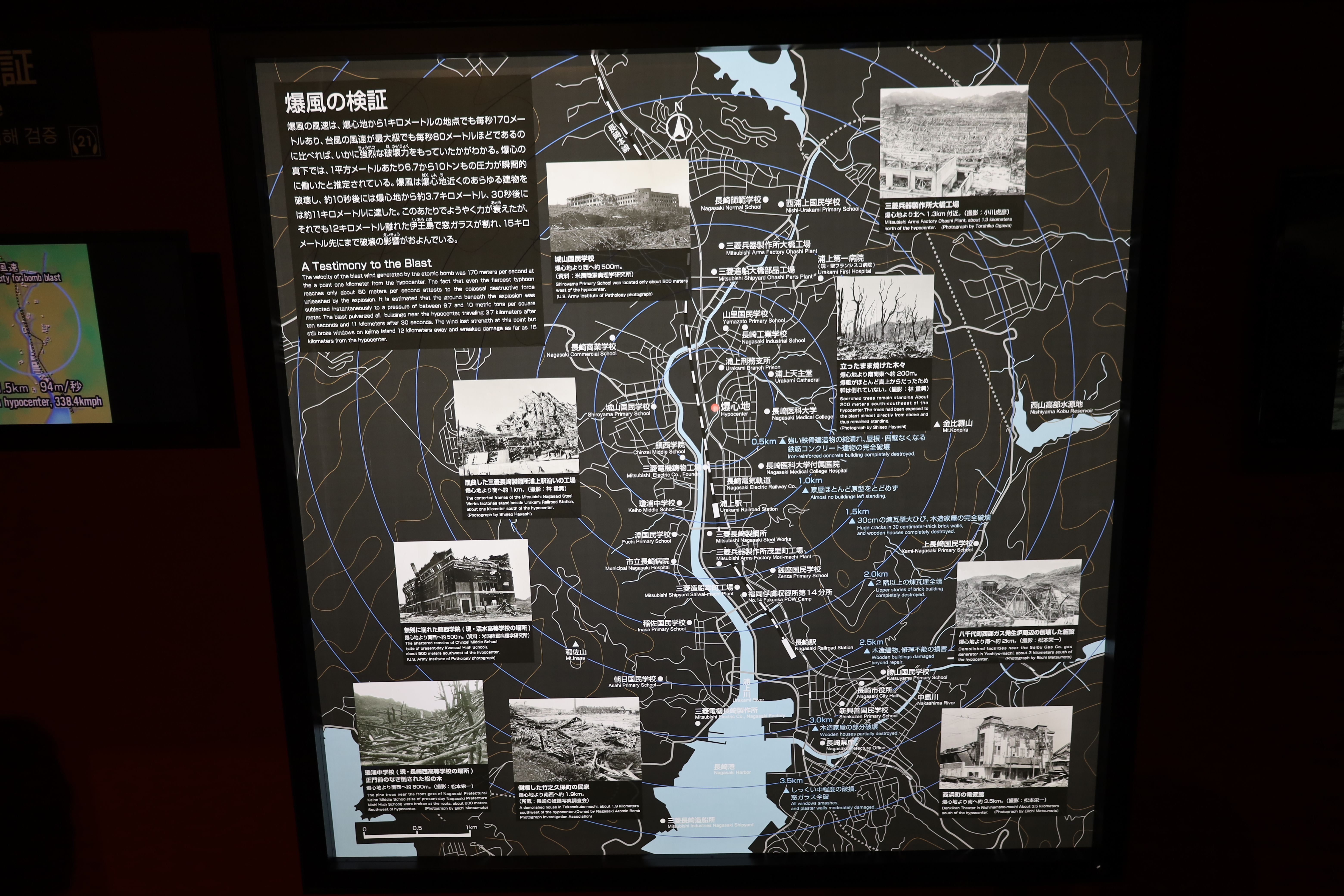
A display at the Nagasaki Atomic Bomb Museum dedicated to the remembrance of the atomic bombing of Nagasaki by the USA on 9 August 1945 at 11:02:35 am. Together with Hiroshima it symbolizes the nuclear age, remind visitors of the vast destruction and indiscriminate death caused by nuclear weapons, and signify a commitment to peace. This display shows the devastation within various radii of the hypocenter (ground zero, epicenter).
Location : Nagasaki City, Nagasaki Prefecture, Kyushu Island
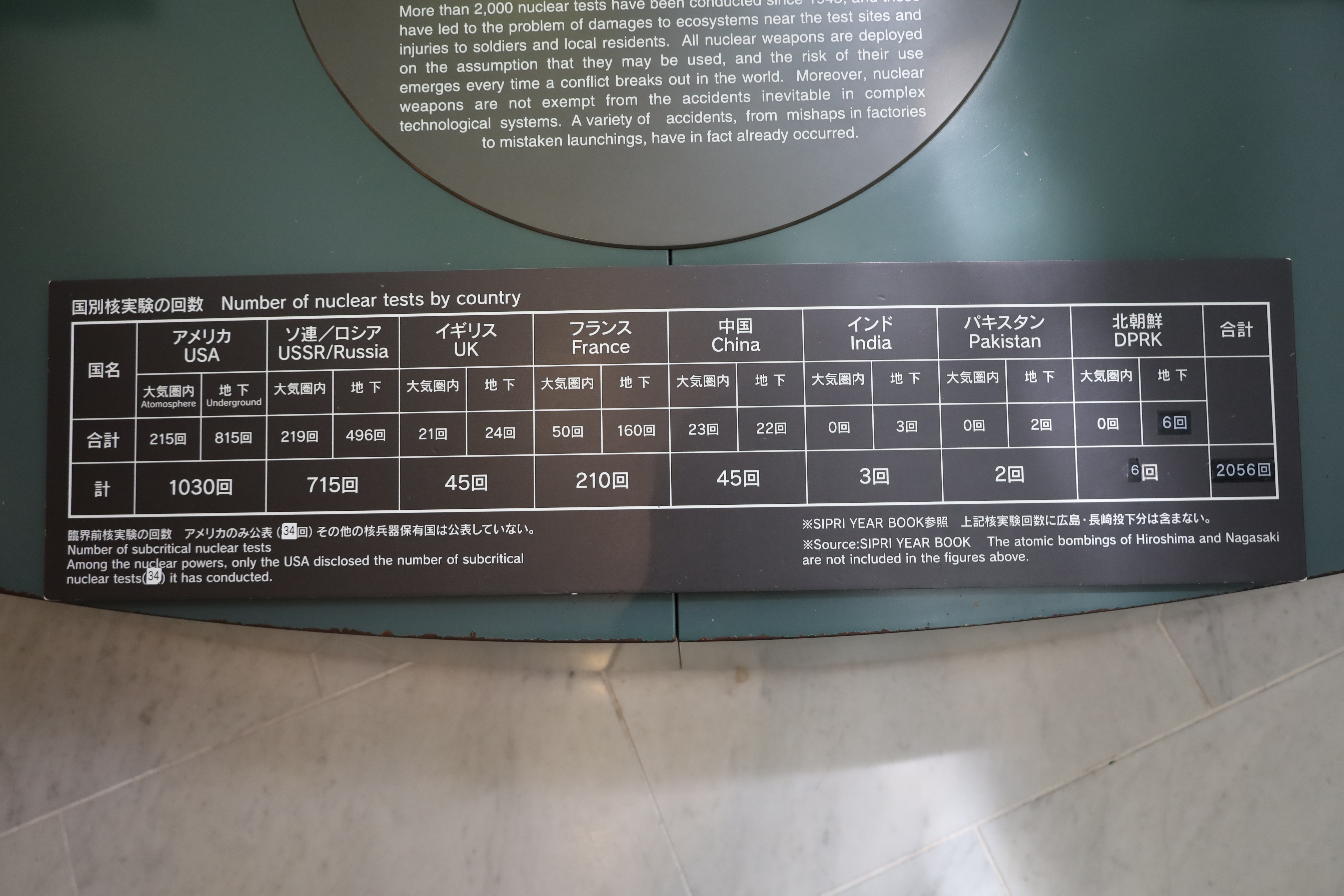
This display shows the number of above ground and underground tests that various countries have performed. This has led to ecosystem damage near test sites and injuries to soldier and local residents. In total 2,056 Nuclear Test have been conducted. With the USA at 1,030 (215 atmospheric, 815 underground); USSR 715 (219, 496); UK 45 (21, 24); France 210 (50, 160); China 45 (23, 22); India 3 (0, 3); Pakistan 2 (0, 2); DPRK 6 (0, 6).
Location : Nagasaki City, Nagasaki Prefecture, Kyushu Island
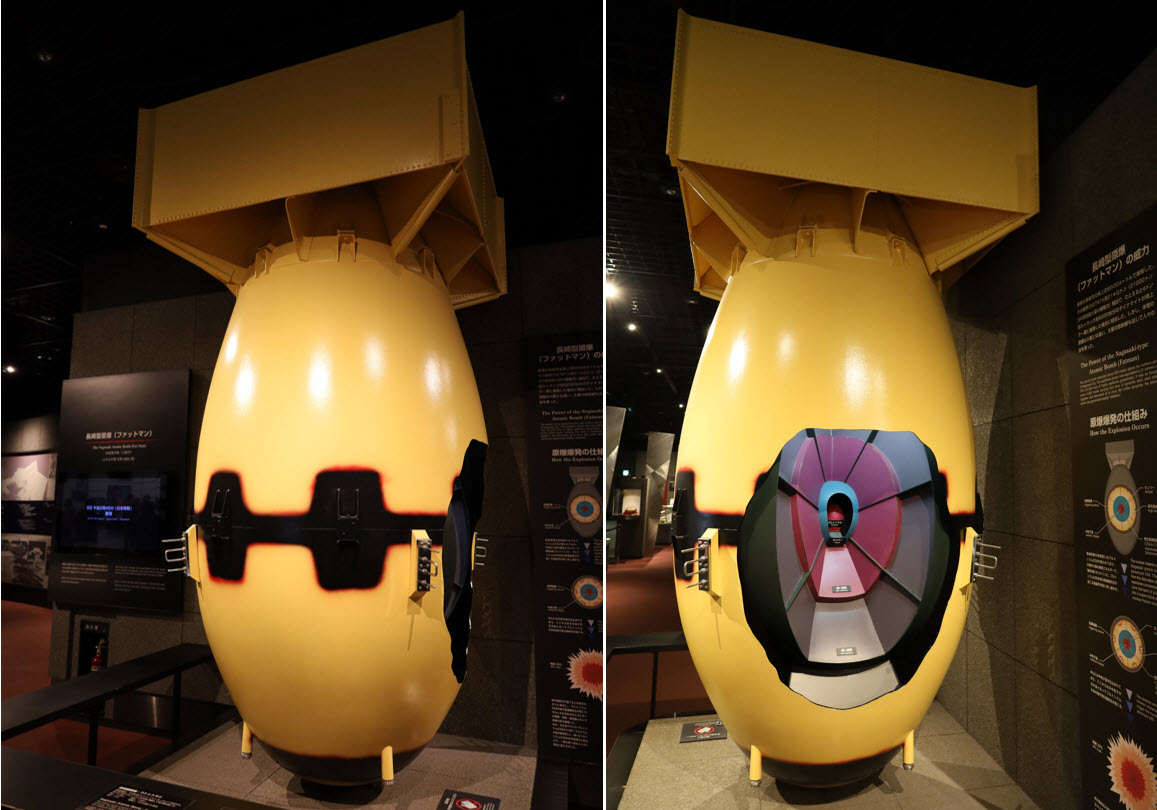
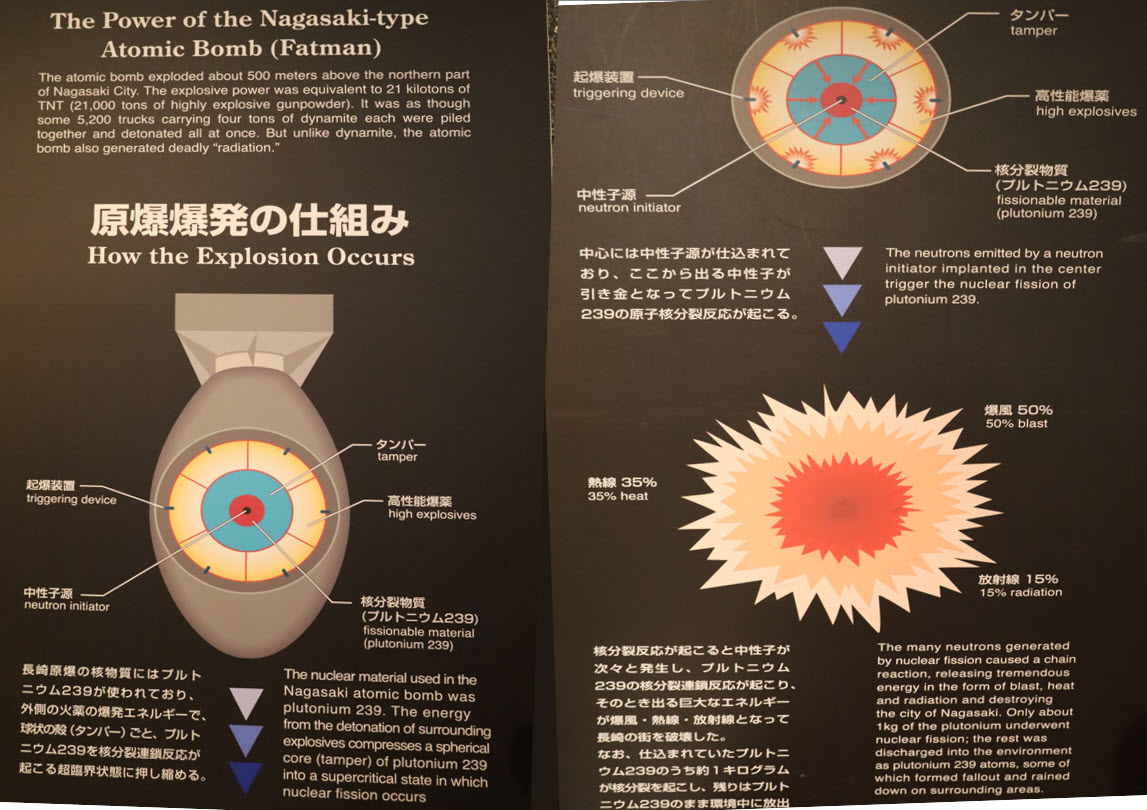
A replica of Fat Man, the Plutonium-239 bomb dropped on Nagasaki. The atomic bomb exploded 1640 feet (500 meters) above the northern part of Nagasaki City. The explosive power was equivalent to 21,000 tons of TNT. It was as though 5,200 trucks with 4 tons of dynamite each were piled together and detonated at once. But unlike dynamite the atomic bomb also generated radiation. The Nuclear material used in the Nagasaki bomb was Plutonium 239. The energy from the detonation of surrounding explosives compresses a spherical core (tamper) of plutonium 239 into a supercritical state in which nuclear fission occurs. The neutrons emitted by a neutron initiator implanted in the center trigger the nuclear fission of plutonium 239. The neutrons generated cause a chain reaction, releasing thremendous energy in the form of blast force, heat and radiation which destroyed Nagasaki. Only about 1kg of plutonium underwant nuclear fission, the rest was discharged into the environment as plutonium 239 atoms.
Location : Nagasaki City, Nagasaki Prefecture, Kyushu Island
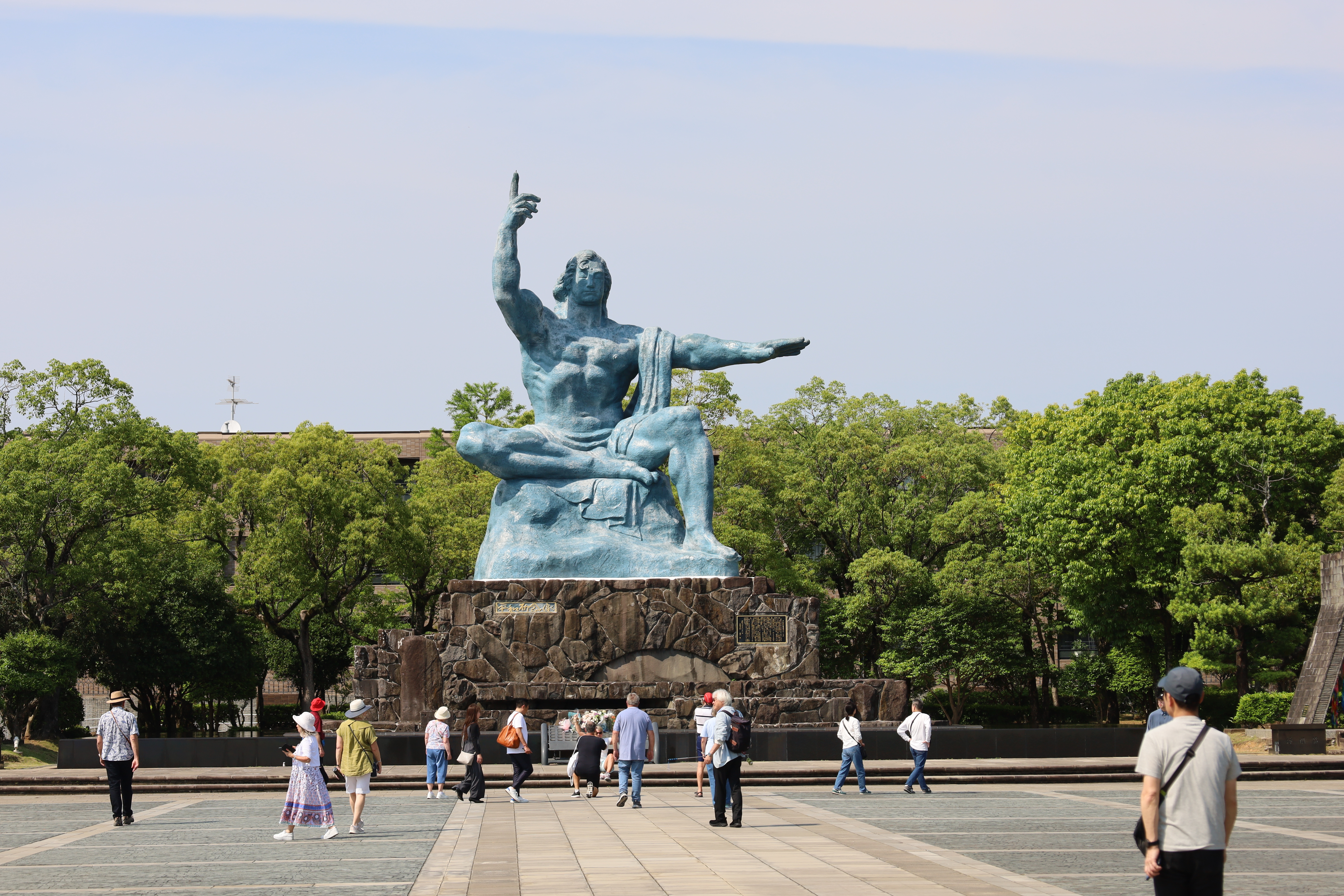
Nagasaki Peace Park commemorates the atomic bombing of the city on August 9, 1945 during World War II. It is next to the Atomic Bomb Museum.
It was established in 1955 near the hypocenter of the explosion, remnants of a concrete wall of Urakami Cathedral can be seen. Urakami Cathedral was the grandest church in east Asia at the time. At the park's north end is the 32 feet (10 meter) tall Peace Statue created by sculptor Seibo Kitamura of Nagasaki Prefecture. The statue's right hand points to the threat of nuclear weapons while the extended left hand symbolizes eternal peace. The mild face symbolizes divine grace and the gently closed eyes offer a prayer for the repose of the bomb victims' souls. The folded right leg and extended left leg signify both meditation and the initiative to stand up and rescue the people of the world. The statue represents a mixture of western and eastern art, religion, and ideology. Installed in front of the statue is a black marble vault containing the names of the atomic bomb victims and survivors who died in subsequent years.
A plaque by the Peace Statue is titled Words from the Sculptor and reads:
After experiencing that nightmarish war, that blood-curdling carnage,
that unendurable horror, Who could walk away without praying for peace?
This statue was created as a signpost in the struggle for global harmony.
Standing 32.8 feet tall, it conveys the profundity of knowledge and
the beauty of health and virility. The right hand points to the atomic bomb,
the left hand points to peace, and the face prays deeply for the victims of war.
Transcending the barriers of race and evoking the qualities of Buddha and God,
it is a symbol of the greatest determination ever known in the history of Nagasaki
and the highest hope of all mankind. - Seibo Kitamura (Spring 1955)
Location : Takamori, Kumamoto Prefecture, Kyushu Island
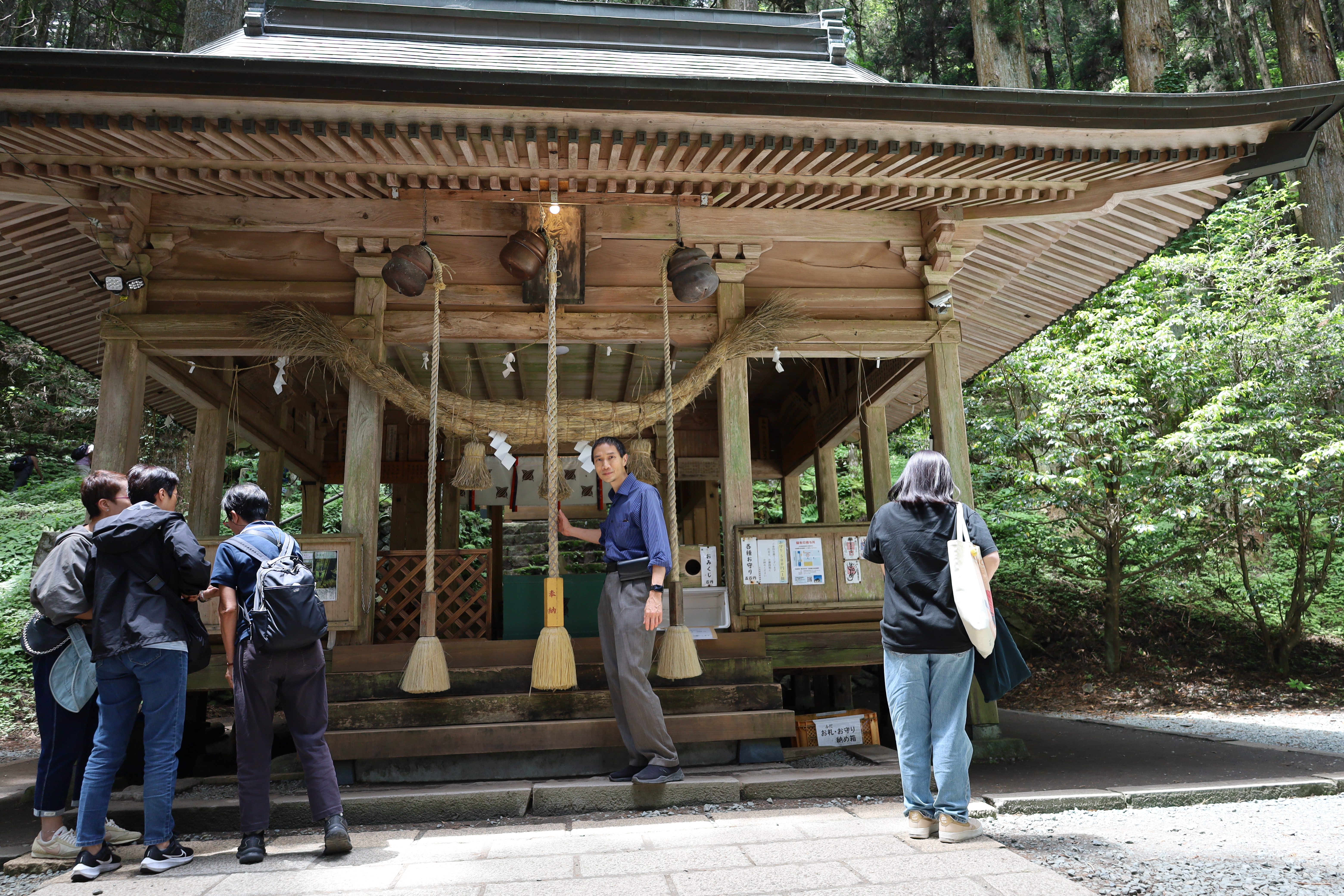
Kamishikimi Kumanoimasu Shrine (Kamishikimi Kumano-imasu-jinja) is a Shinto Shrine in Takamori, Kumamoto Prefecture. This shrine is famous for being the setting of a popular anime and manga comic Hotarubi no Mori e. The shrine started to offer ritual service in 14th century. The Kamishikimi Kumanoimasu Shrine is dedicated to the creator gods Izanagi-no-Mikoto and Izanami-no-Mikoto from Japanese mythology.
Location : Fukuoka City, Fukuoka Prefecture, Kyushu Island
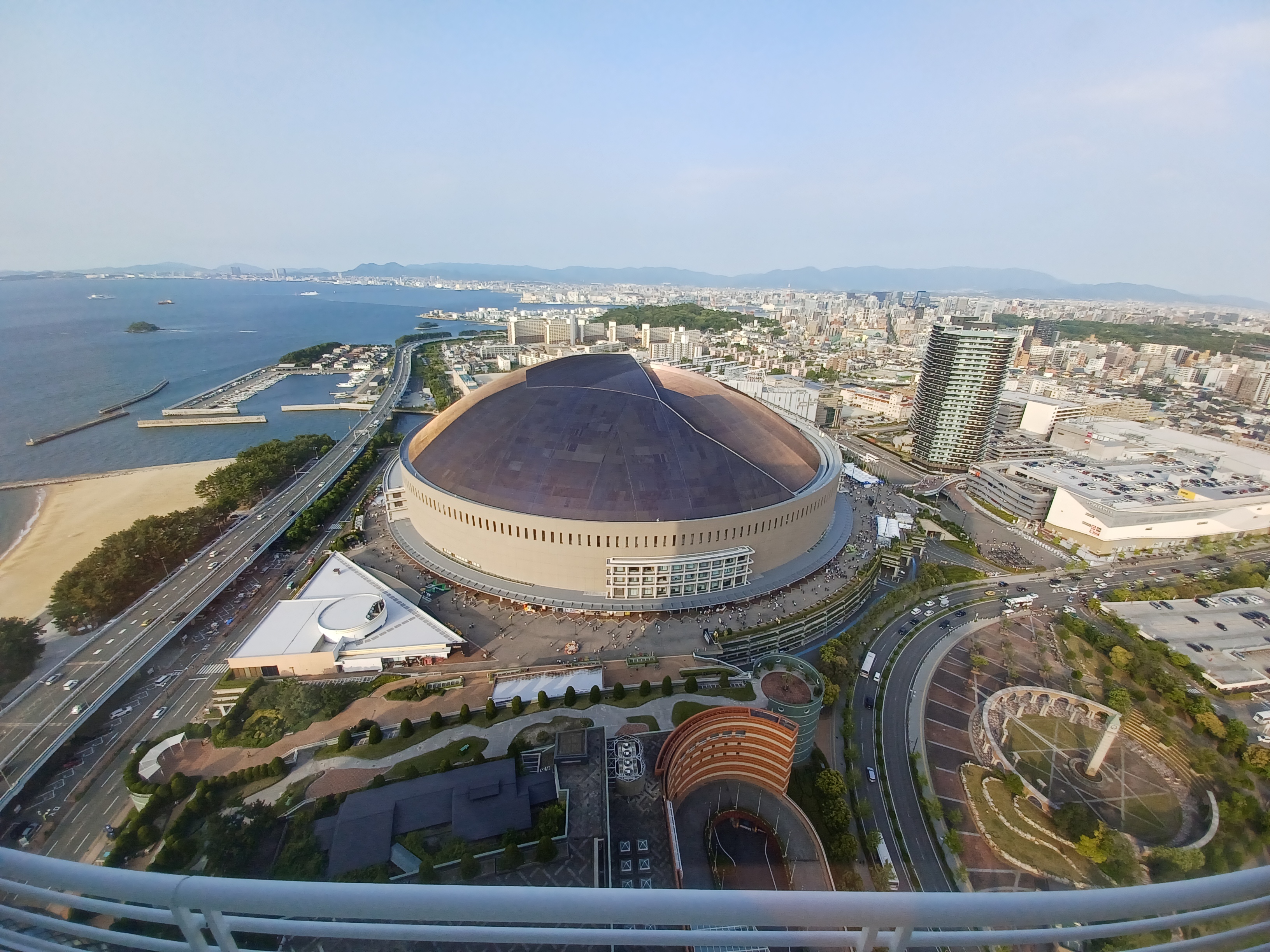
Fukuoka is the sixth-largest city in Japan and the capital city of Fukuoka Prefecture, Japan. The city is built along the shores of Hakata Bay, and has been a center of international commerce since ancient times. It is the gateway to the country, as it is the nearest point among Japan's main islands to the Asian mainland. Humans occupied the area since the Jomon period. The city rose to prominence during the Yamato period. Because of cross-cultural exposure, and distance from the political centers of Kyoto, Osaka, and Edo (Tokyo), Fukuoka gained a distinctive local culture and dialect that has persisted to the present. Fukuoka is the largest city west of Keihanshin. It was designated by government ordinance on April 1, 1972. Greater Fukuoka has a population of 2.5 million people as part of the heavily industrialized Fukuoka–Kitakyushu zone. In July 2011, Fukuoka surpassed the population of Kyoto. Since the Kyoto founding in 794 it was the first time a city west of the Kansai region had a population larger than Kyoto.
Location : Dazaifu, Fukuoka Prefecture, Kyushu Island
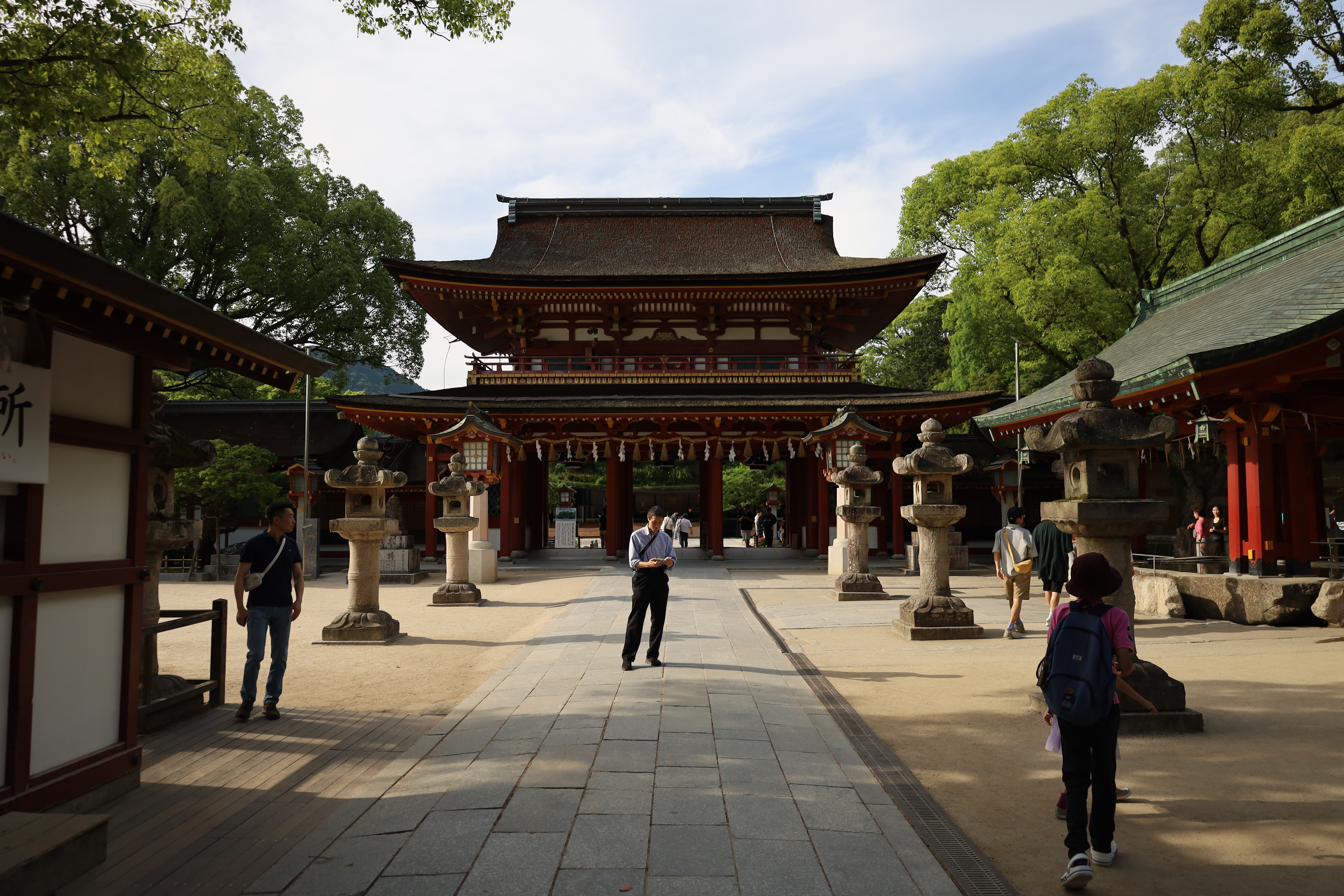
Dazaifu Tenman-gu is a Shinto shrine in. It is built over the grave of Sugawara no Michizane (845–903) and is one of the main shrines dedicated to Tenjin, the deified form of Michizane. Michizane was a gifted student who composed poems dedicated to plum trees. Favored by the gods, Michizane raised the ire of the Fujiwara clan, who exiled him to Kyushu. Michizane spent his exile studying, and died at the age of 57. When Michizane died, his body was carried by an ox that stopped near a Buddhist monastery. Unable to move the body along, Michizane was buried there by his follower, Umasake no Yasuyuki, and the shrine was built there. A statue of an ox stands nearby to commemorate the event. It's also said that the plum tree inside the shrine flew from Kyoto to be reunited with Michizane in his death. It is the first plum tree to bloom in Japan. After Michizane died, five members of the Fujiwara clan, the royal family involved in Michizane's exile, died, one from a lightning strike that struck the clan's castle. Michizane, deified as Tenjin, was thus seen as a vengeful spirit. When disasters struck Kyoto, the Fujiwara clan aimed to appease Michizane's spirit and, as penance, reinstated his position and rank posthumously. Through this appeasement, Tenjin's reputation became associated with literature and education.
Location : Kumamoto Prefecture, Kyushu Island
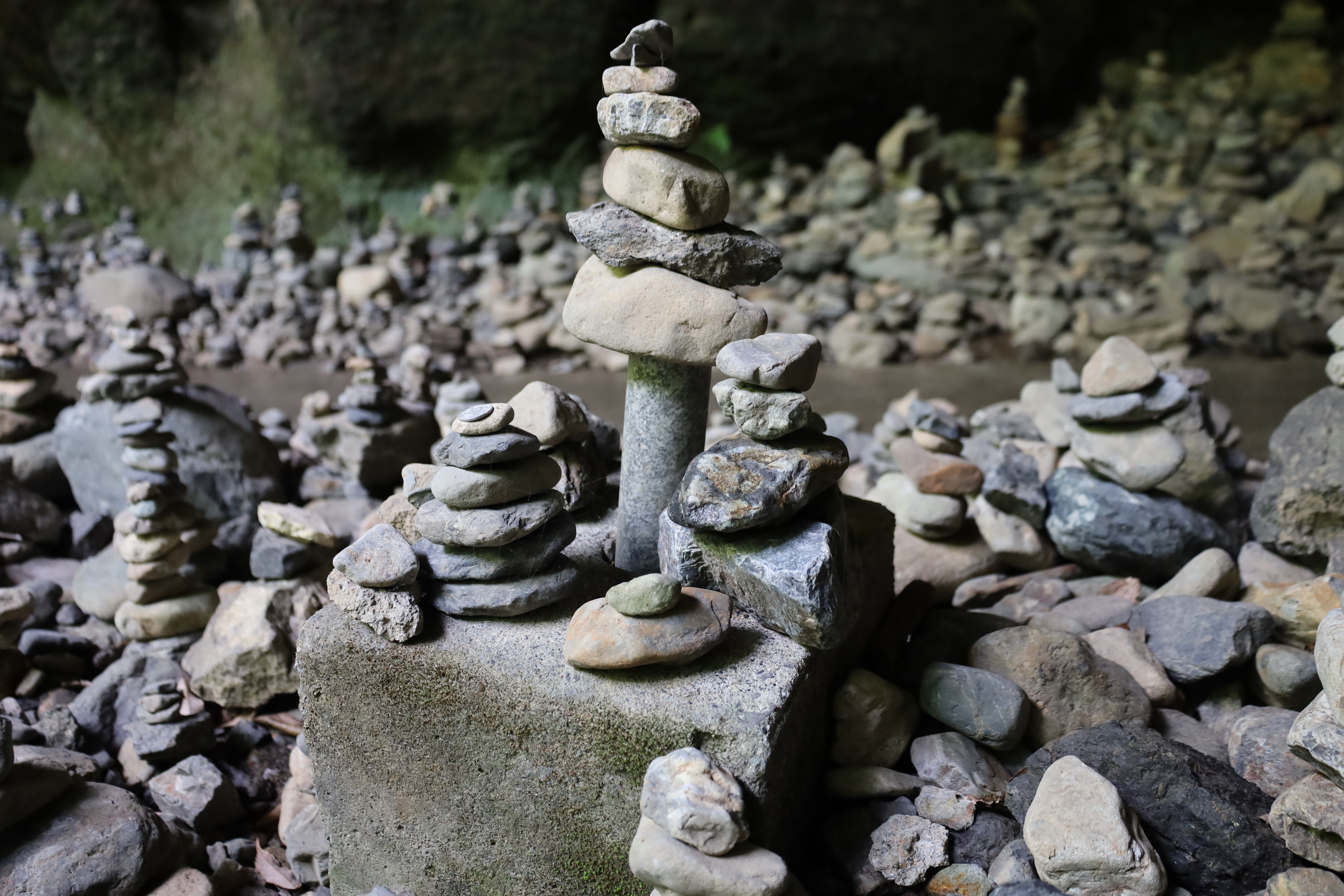
Ama-no-Iwato (in Japanese, "heaven's rock cave") is a cave in Japanese mythology. According to the legend, Amaterasu hid in a cave called Amano-Iwato after being upset with her brother, Susanoo. Her absence caused the world to fall into darkness, leading the other gods to devise a plan to lure her out. This myth highlights themes of light, darkness, and the cyclical nature of life. To get Amaterasu out of the cave, the other eight million gods threw a party outside with wisdom of Omoikane. The goddess Ame-no-Uzume-no-Mikoto performed a lewd dance, eliciting laughter. Amaterasu grew curious about the source of amusement and peeked out of the cave. She was fascinated by her own reflection in the mirror Yata no Kagami and other gods had crafted. Ame-no-Tajikarao then forced the cave open and the world was bathed in light once again. The cave is a pilgrimage site to pay homage to Amaterasu. It is surrounded by lush forests and offers a serene atmosphere, making it a place of reflection and spiritual connection. Visitors come to experience natural beauty and to learn about its rich cultural heritage.
Location : Hakata District, Fukuoka City, Fukuoka Prefecture, Kyushu Island
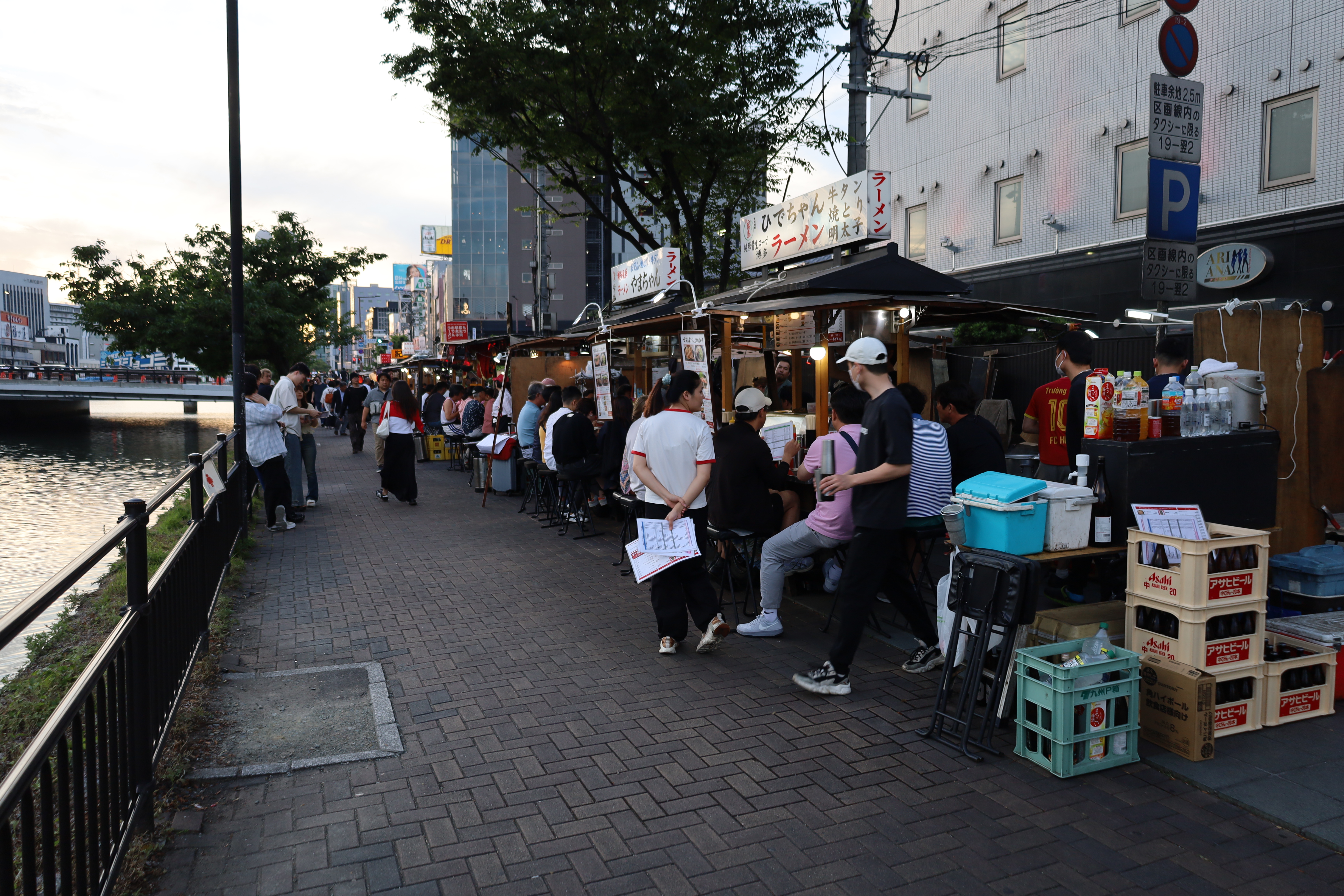
Nakasu Yatai Yokocho, also known as Food Stalls Street, is a vibrant and essential part of Fukuoka's food culture. With around 100 independently run yatai (Food Stall). It offers an authentic experience to mingle and connect with locals. The street is renowned for its iconic dishes such as Hakata ramen, grilled Skewers (yakitori), and Oden. A variety of Yatai stalls line the Nakasu Island river.
Location : Markis Mall, Fukuoka city, Fukoka prefecture, Kyushu Island
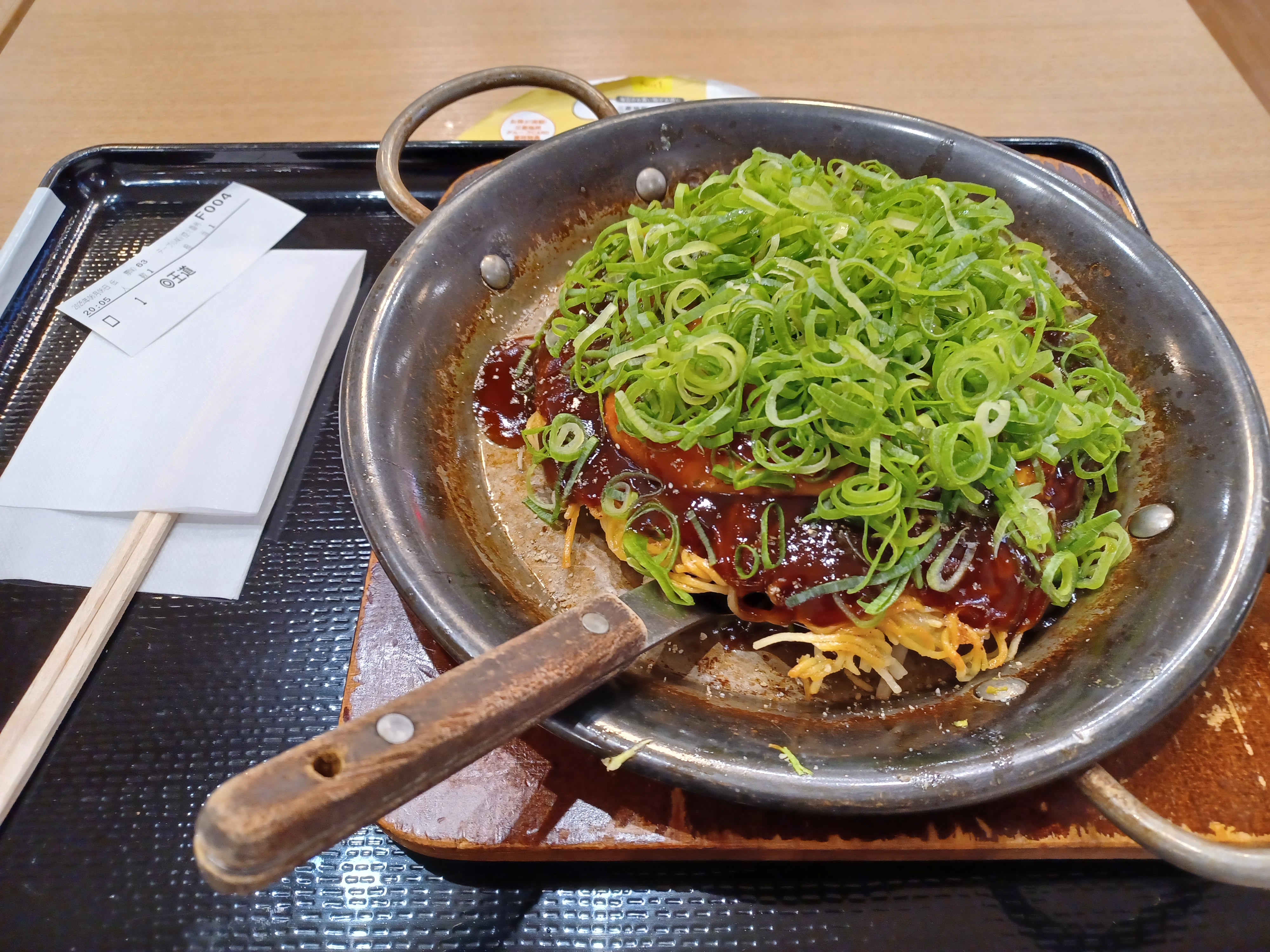
Okonomiyaki is a Japanese teppanyaki dish created from wheat flour batter, noodles, cabbage and other ingredients. It is cooked on a teppan (flat griddle). Common additions include cabbage, meat, and seafood. Toppings include okonomiyaki sauce (made with Worcestershire sauce), aonori (dried seaweed flakes), katsuobushi (bonito flakes), Japanese mayonnaise, and pickled ginger. Okonomiyaki is associated with two variants from Hiroshima or the Kansai region. It is widely available throughout Japan, with toppings and batters varying by area. The name is derived from the word okonomi, meaning "how you like" or "what you like", and yaki, meaning "grilled". It is an example of konamono (konamon in the Kansai dialect), or flour-based Japanese cuisine. It is also called by an abbreviated name, "okonomi", where the O is a politeness prefix and konomi means 'favorite'. A liquid-based okonomiyaki, popular in Tokyo, is called monjayaki (also written as monja yaki) and abbreviated as monja. Outside Japan, it can also be found served in Manila, Taipei, Bangkok, and Jakarta by street vendors.
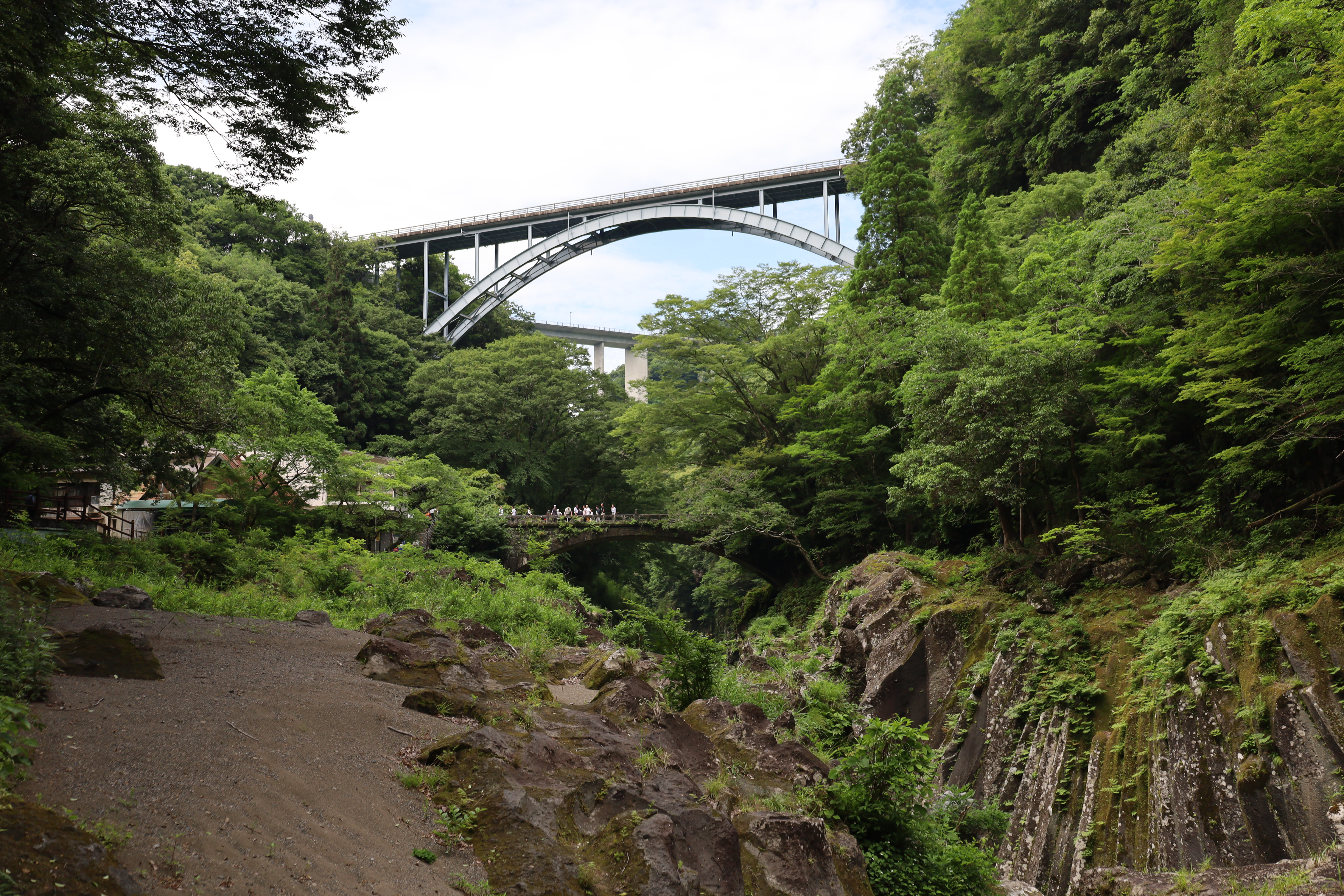
Location : Takachiho Gorge, Nishiusuki District, Miyazaki Prefecture, Kyushu Island
Takachiho Gorge is a natural wonder located in the Miyazaki Prefecture. It has breathtaking scenery, steep cliffs, lush greenery, and a beautiful river. The gorge was formed by volcanic activity, specifically from the lava flow of Mount Aso, which created the unique rock formations and cliffs. The gorge stretches 7 kilometers (4.3 miles) characterized by narrow passages and towering basalt columns. One main attractions within the gorge is Manai Waterfall that drops 17 meters (56 feet). Visitors can rent boats to paddle along the Gokase River, providing a unique perspective of the gorge's cliffs and waterfalls. There are well-maintained walking paths along the gorge, allowing visitors to explore the area on foot and enjoy the natural beauty. Takachiho is steeped in Japanese mythology, particularly in Shinto beliefs. It is said to be the place where the sun goddess Amaterasu hid in a cave, leading to the creation of the world as we know it. The nearby Takachiho Shrine is dedicated to the sun goddess and is a popular pilgrimage site.